Save up to 60% on yearly plans and enjoy our biggest offer of the year. Limited time only. 🍂
See pricing

What is a questionnaire? (Definition and examples)

Summarize with
We can reach data easier day by day. One search - done. One question - done. It is all more reachable now. However, is data collection less important than yesterday? Absolutely, no. In this article, we’ll focus on the questionnaire definition with examples, tools to use and more. Also, as a person who frequently creates questionnaires, I will give the best tips as much as possible.
What is a questionnaire?
A questionnaire is a set of questions used to collect information from a targeted audience.
It can include various question types, such as multiple-choice, rating scale, or open-ended questions. The collected survey responses help organizations gather insights, measure opinions, and make informed decisions.
4 types of questionnaires
- Open-ended questionnaires
- Closed-ended questionnaires
- Multiple choice questionnaires
- Mixed questionnaires
What is an open questionnaire?
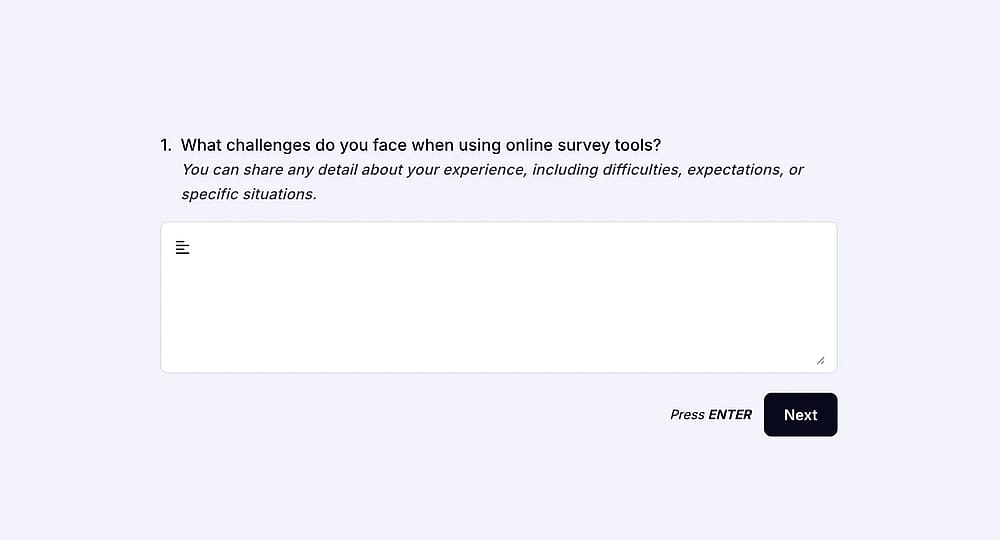
An open questionnaire sample
An open questionnaire is a type of questionnaire that uses open-ended questions, allowing respondents to answer in their own words instead of selecting from predefined answer options.
This format helps researchers and organizations gather information in greater detail, making it useful for exploring opinions, experiences, and ideas.
Ideal for collecting detailed feedback, personal opinions, and unique insights that predefined answer choices might miss. It works best when you want to explore respondents' thoughts in depth and uncover unexpected information.
What is a closed questionnaire?
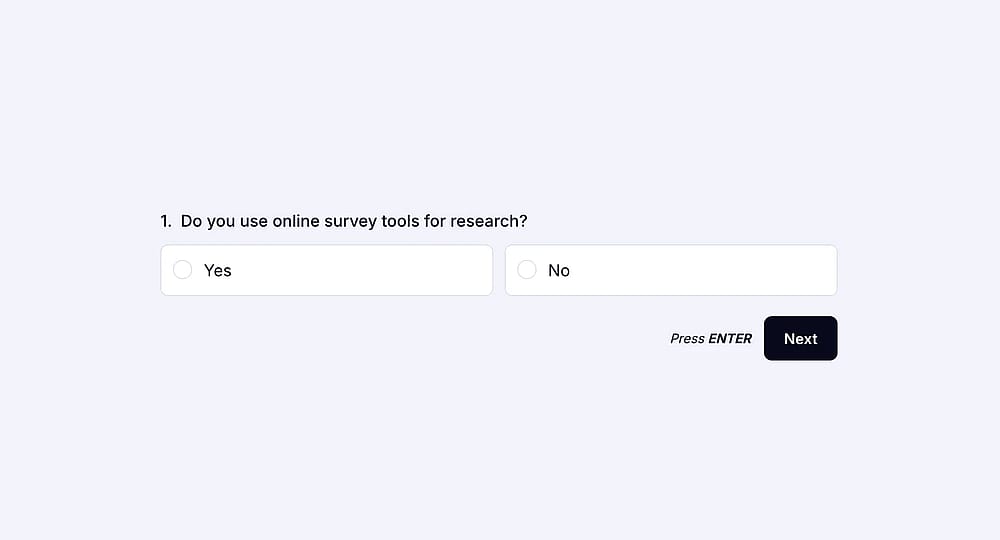
A closed questionnaire sample
A closed questionnaire is a type of questionnaire that uses predefined answer options, such as multiple-choice questions, rating scales, or yes/no responses. Its main purpose of questionnaire design is to collect standardized data that is easy to compare and analyze.
Closed questionnaires are commonly used in surveys and research projects where consistent responses and quantitative results are important.
Ideal for surveys and research projects that require clear, measurable results. Closed questionnaires make it easy to collect consistent data and analyze responses at scale.
What is a multiple-choice questionnaire?
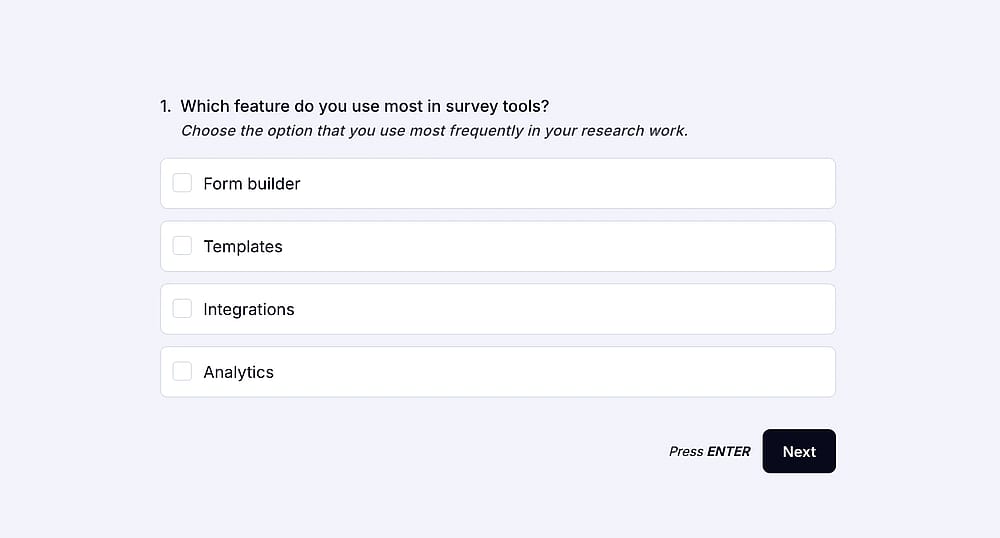
A multiple-choice questionnaire sample
It is a type of questionnaire survey that presents respondents with a list of predefined answer options for each question. Instead of writing their own answers, participants select the option that best matches their opinion, preference, or experience.
This format makes it easier to collect consistent survey data, analyze results, and compare responses across a large group of participants.
Ideal for collecting standardized feedback from large groups and analyzing survey data quickly. It works well when you need clear, consistent responses that are easy to compare and report on in a questionnaire survey.
What is a mixed questionnaire?
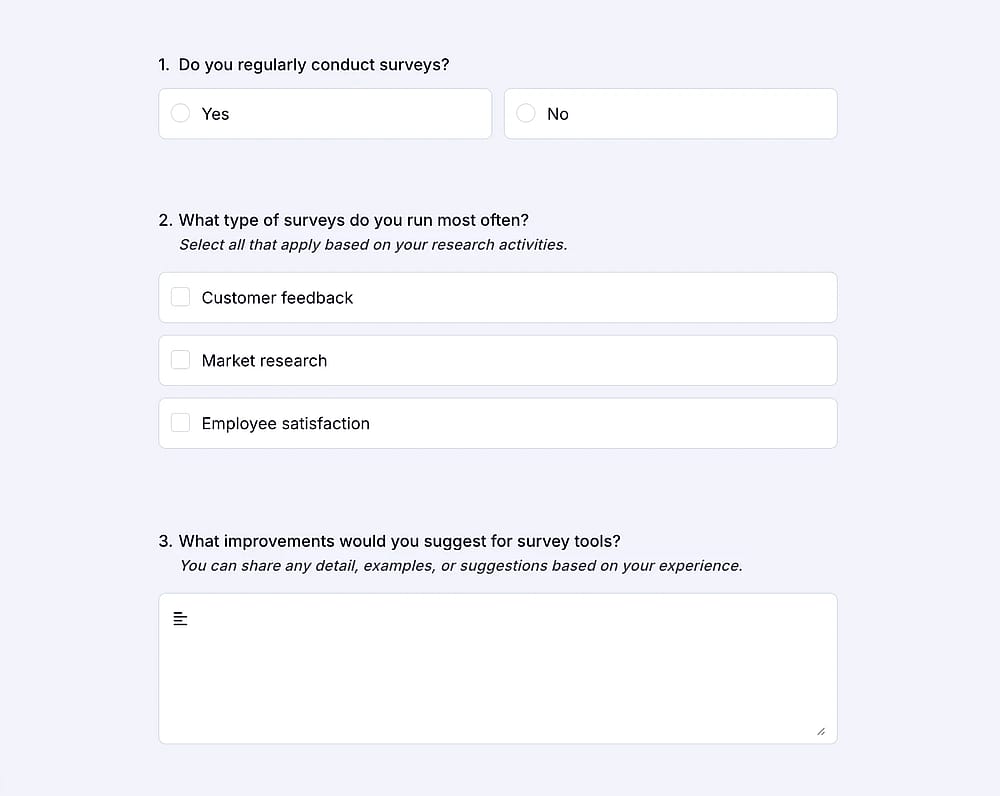
A mixed questionnaire sample
A mixed questionnaire combines both open-ended and closed-ended questions. This approach allows researchers to collect measurable survey data while also gathering detailed feedback and personal insights from respondents, providing a more complete understanding of the topic being studied.
Ideal for gathering both quantitative and qualitative insights in a single survey. It works well when you need structured survey data for analysis while also giving respondents the opportunity to explain their thoughts in their own words.
How to create an online questionnaire?
By choosing the correct questionnaire maker, creating a survey or questionnaire becomes super easy and fast. Speaking of starting easy and fast, forms.app is a good option for you.
Step 1
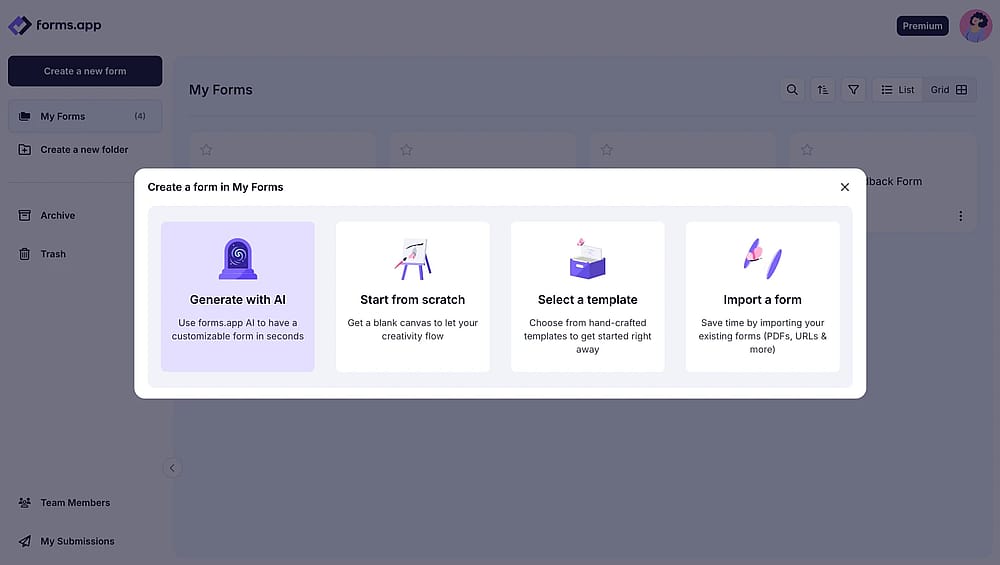
Choose a way to create your questionnaire
Choose a ready made template or start with AI. It is also possible to generate a survey from a PDF, image or website too.
💡 Expert tip: Starting with AI always saves time. I simply give a basic prompt and receive the questionnaire based on my need. Even if the questions are not exactly suitable for my study, it is easier for me to change the questions rather than creating one from scratch.
Step 2
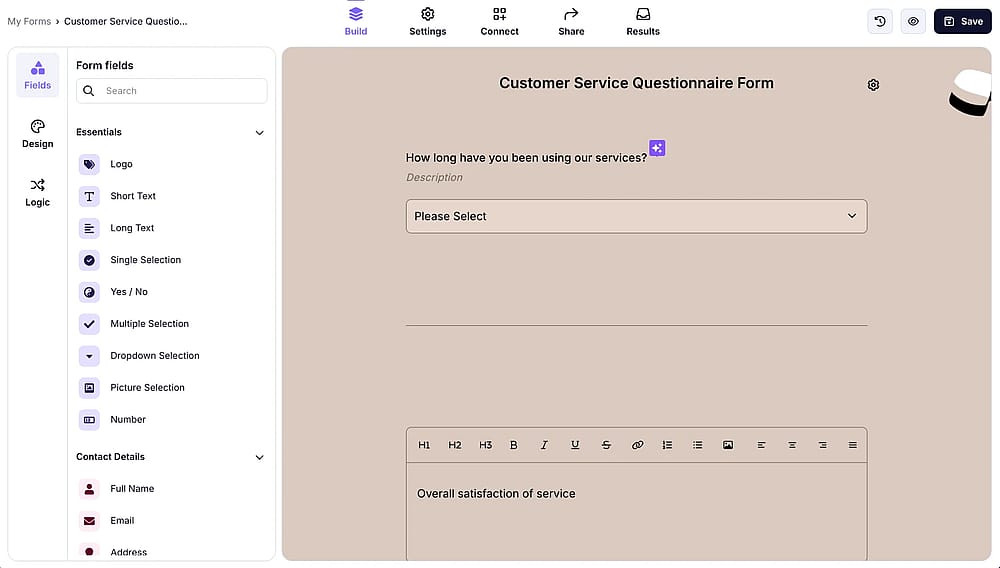
Add - edit your questions
Add your own questions or edit the existing ones. Questions are the heart of your survey. So, before even getting started, you should know the aim of your questionnaire. Answering this will shape your question types and content automatically.
💡 Expert tip: If your goal is to measure customer satisfaction, use rating scale questions for quick survey data and add one open-ended question like “What could we improve?” to capture actionable feedback. This mix keeps your question types purposeful and easier to analyze.
Step 3
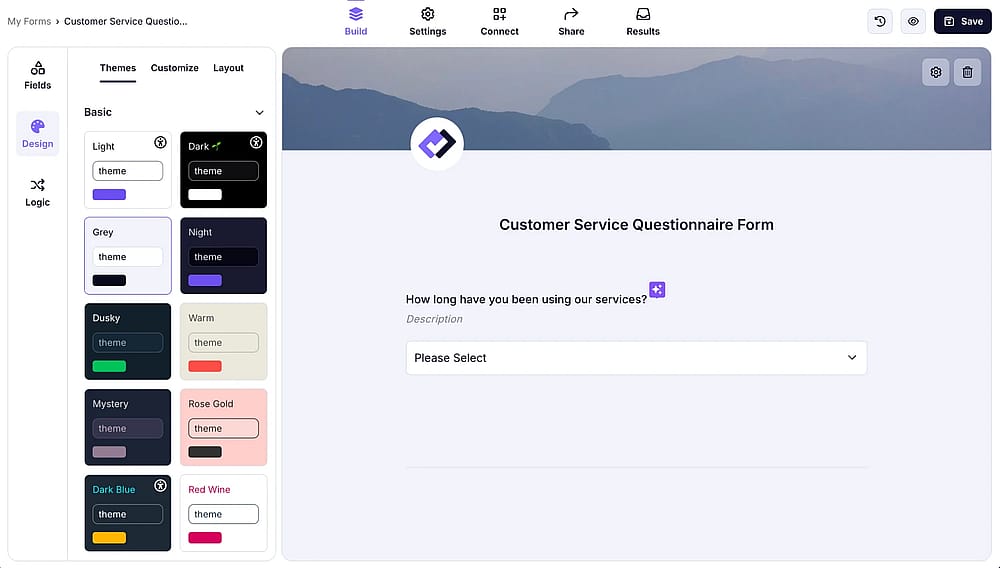
Design your questionnaire
Customize the design. Add your logo & cover, pay attention to the theme and visuals. Professional look helps build trust with your audience and increases response rates.
Step 4
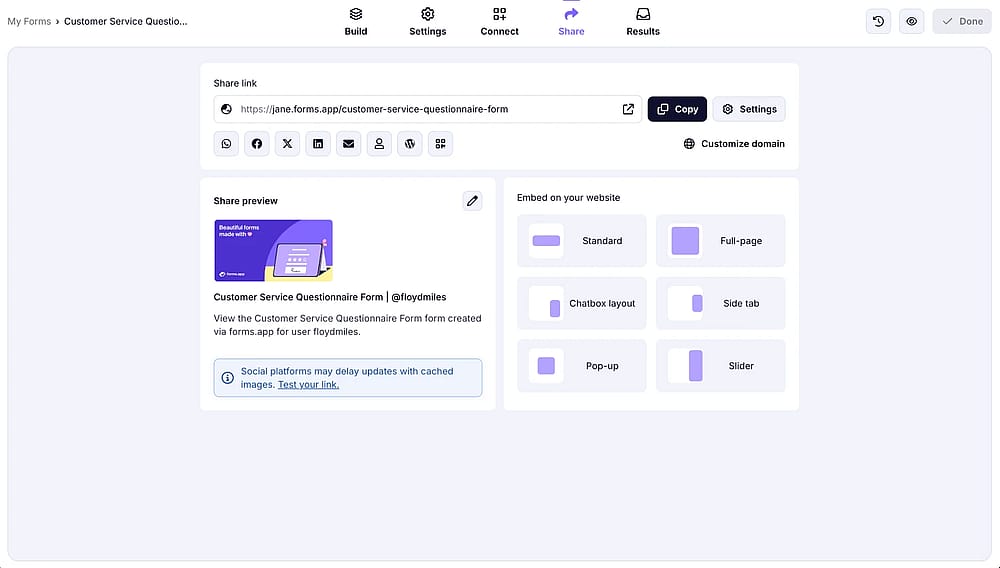
Test & Share your questionnaire
Preview & share. Check how your questionnaire looks and works before publishing it. Then share it with your targeted audience through a link, email, or embed it on your website.
Step 5
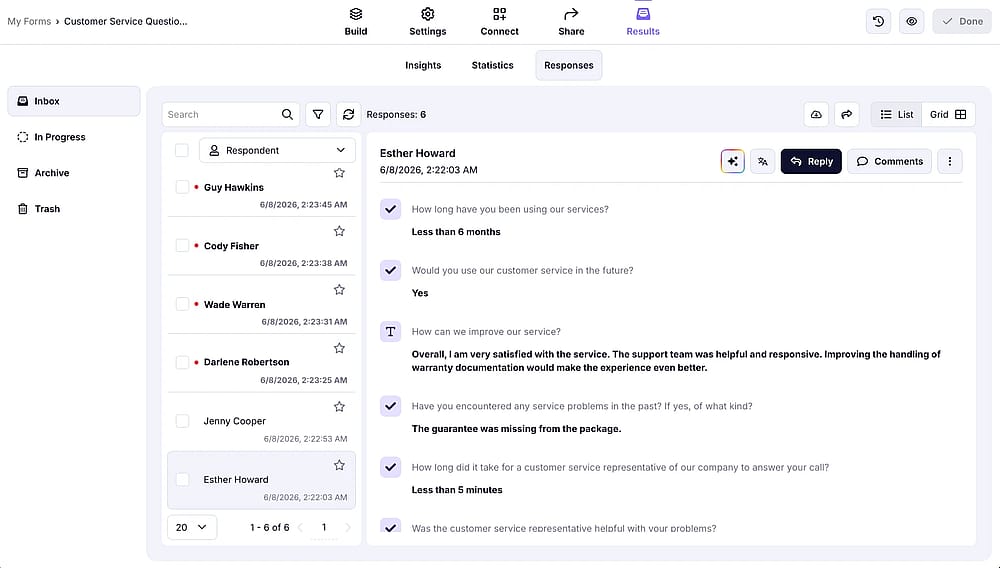
Analyze your responses
Check your gathered data. Review responses in real-time to spot patterns, trends, and gaps in your results. This helps you turn raw survey data into actionable insights.
Frequently asked questions (FAQs)
A questionnaire in research is a structured set of questions used to collect data from a targeted audience for analysis and study purposes. It helps researchers gather consistent survey responses using different question types, making it easier to measure opinions, behaviors, or experiences in a systematic way.
You can create a free questionnaire using online tools that let you build and share forms without any cost. Simply choose a template or start from scratch, add your questions using different question types, and share it with your audience via a link or email. Many platforms also allow you to collect free online survey responses in real time and analyze the results automatically.
A good questionnaire is clear, focused, and easy for respondents to complete. It uses well-structured question types that match the goal of the research and avoids unnecessary or confusing questions. It also ensures high-quality survey responses by being concise, relevant, and designed for a specific targeted audience.
- June 2026 - Definition and types reviewed
- June 2026 - Questionnaire creation steps fully revised
- June 2026 - Visuals updated
Contributors
Researched & written by
forms.app, your free form builder
- Unlimited responses
- Unlimited questions
- Unlimited team members