Save up to 60% on yearly plans and enjoy our biggest offer of the year. Limited time only. 🍂
See pricing

Rental forms: Free templates, tips & how to create one
Summarize with
Finding the right tenant, or the right home, if you're on the other side of the table, is never as simple as it sounds. That's exactly the gap that rental forms for landlords are built to close.
💡 From experience: I helped a friend screen applicants for their first rental unit, and even after a promising phone call, half the "must-know" details only surfaced once we had everything down on paper. A phone call feels thorough in the moment; it rarely is.
A rental form isn't just paperwork. It's the tool that turns a vague conversation into a documented, comparable record, one that protects both the landlord and the tenant if anything is ever disputed later.
What is a rental form?
A rental form is a document homeowners and property managers use to collect structured information from tenant candidates.
It works both ways: tenants share details about their household, budget, and priorities, while landlords use that data to judge fit, verify history, and set expectations from day one.
Beyond the initial screening, forms for rental property management span the entire tenancy, from the first application to the final move-out inspection.
Types of rental forms
1. Rental application form: The form landlords use to screen tenants and collect background, income, and reference details from prospective tenants before approving them.
2. Rental agreement form (lease agreement): The binding contract that sets out how much rent the tenant will pay rent, for how long, and under what conditions.
3. Move-in / move-out inspection checklist: A record of the property's condition at the start and end of the lease, used to fairly settle any damage or deposit disputes.
4. Lease renewal notice: A written notice letting a tenant know their lease is ending and outlining the terms to renew it.
5. Security deposit return form: A document confirming how much of the deposit is being refunded and detailing any deductions after move-out.
Each one serves a different stage of the relationship, and using the wrong one, say, treating an application form like a binding agreement, is a mistake I've seen trip up first-time landlords more than once.
Why rental forms matter (beyond saving time)
Most guides stop at "it saves time," but the legal side matters just as much.
💡 From experience: The deposit dispute I've seen cause the most friction wasn't about the amount; it was that nothing had been signed upfront to define "normal wear and tear." A one-page agreement would have settled it in minutes.
➡️ They protect you legally. A tenant might later dispute a no-pets policy or a deposit deduction. A signed rental agreement form, backed by a move-in checklist, gives you documented proof of what was agreed, and if things go as far as the eviction process, that paper trail is what holds up.
➡️ They keep you compliant. Local laws often require specific disclosures: rent increase notices, deposit receipts, and more. Using an updated rental agreement form template helps you stay aligned with those requirements instead of guessing.
➡️ They build a paper trail for taxes. Income, deposits, and maintenance costs all need tracking. A dated form makes reconciling records at tax time far less painful.
➡️ They're easy to reach and share. Forms can be sent via a link, over WhatsApp, email, or listing sites, so tenants can respond whenever it suits them, wherever they found the listing, whether that's social media or a real estate site.
➡️ They sharpen your tenant screening process. Well-organized landlord forms make it easier to compare applicants side by side; pulling in a credit report alongside income and reference checks gives you a fuller picture before you decide.
What to ask in a rental application form
A solid rental application form should cover:
- Full name and contact details
- Current address and reason for leaving
- Employment and income information
- Household size and pet details
- Landlord and personal references
- Required move-in date and lease term preference
- Consent statement and signature
Keep it focused. The goal is qualifying a match, not collecting everything possible.
Rental application form vs. Rental agreement form
An application form screens candidates, while a rental agreement form (the lease) is the binding contract once someone's accepted. The application asks questions; the agreement sets terms, rent, duration, responsibilities, and termination conditions.
💡 From experience: This is a mix-up I still see trip people up, assuming the application "already covered it" and skipping a proper agreement. Confusing the two is exactly how avoidable disputes start.
How to create a free rental lease agreement form without coding
Once you've settled on what to ask, building the actual form doesn't need to involve a developer or a paid tool.
💡 From experience: This is the exact process I've walked through myself with forms.app when setting one up, no coding, no template hunting elsewhere.
Here's how it works:
1. Log in or create a free account. Google and Apple sign-in are both supported.
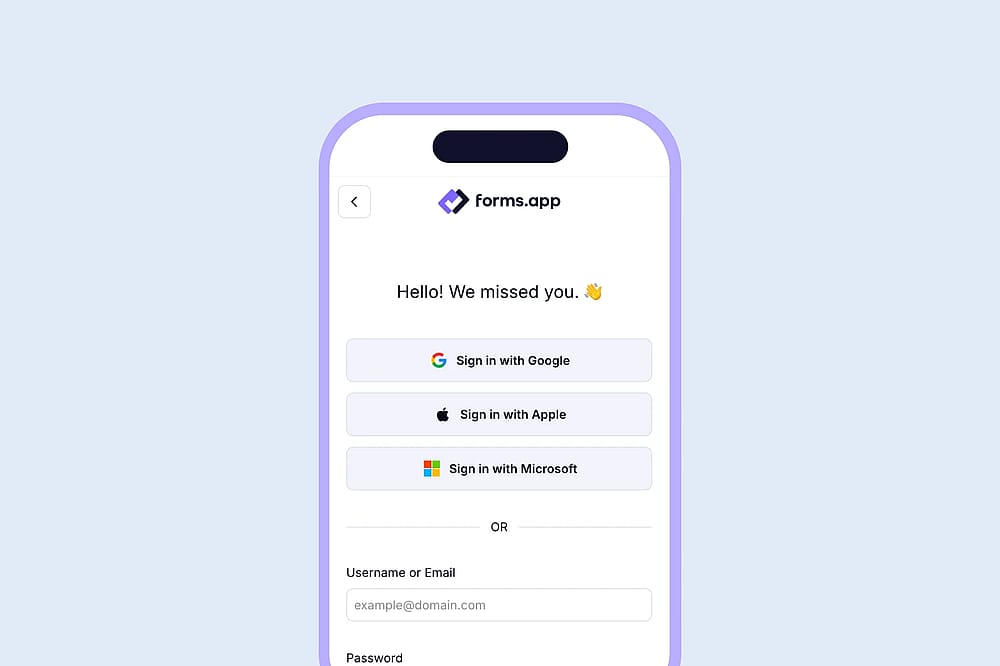
Open your forms.app account
2. Start a new form. Pick a ready-made rental template, or describe what you need to the AI form builder and let it draft the structure for you.

Choose a way to start
3. Add your questions. Layer in the application details above, plus any lease-specific terms like monthly rent or required documents.
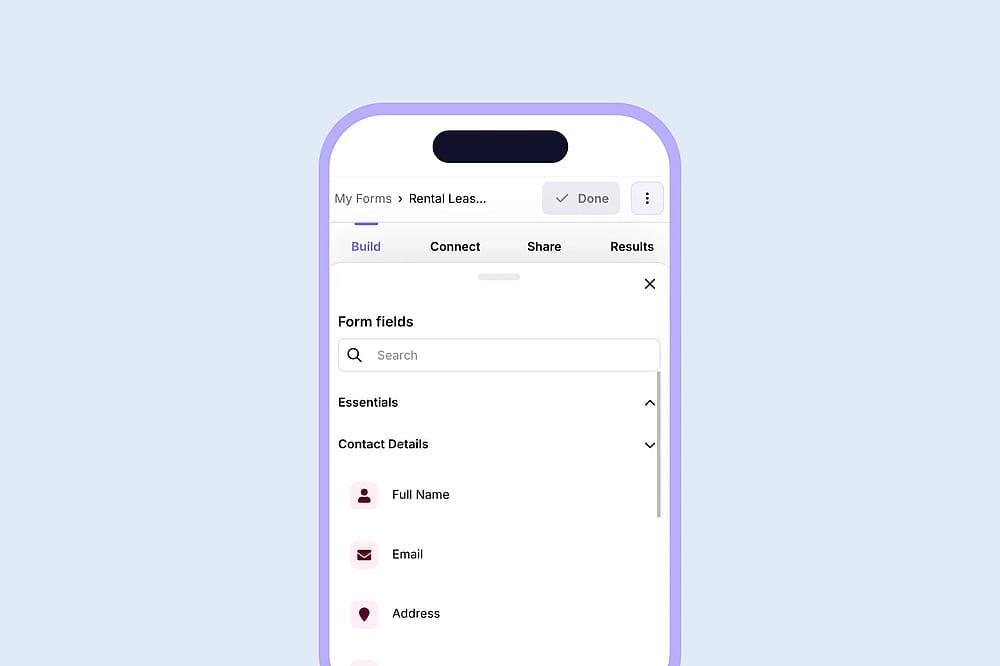
Add your questions in the correct fields
4. Personalize the design. Match your branding with a logo, theme, and fonts; this is what makes the form feel professional rather than generic.
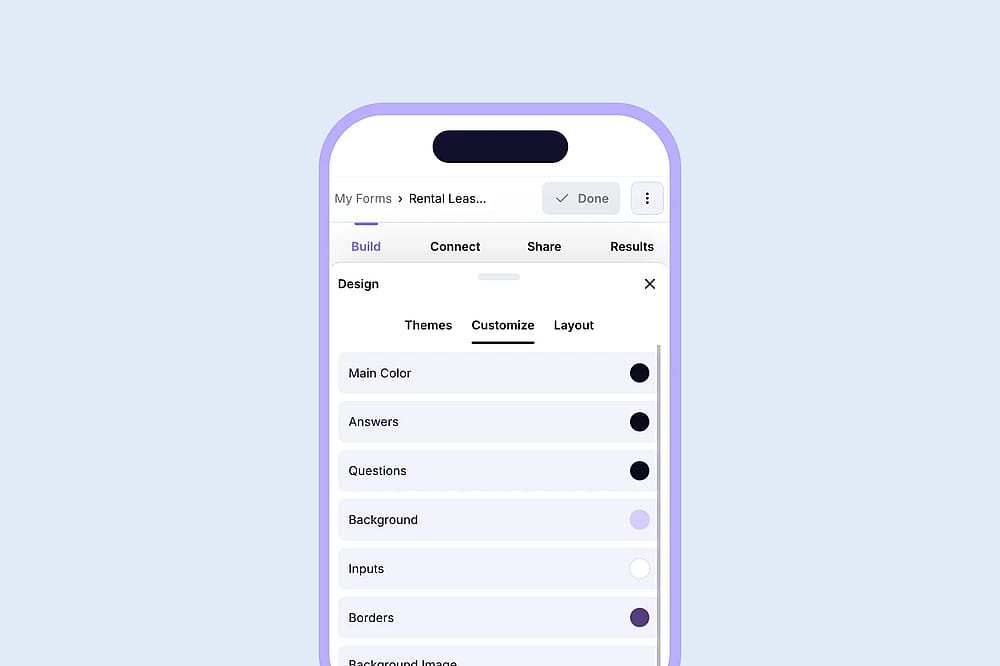
Add your questions in the correct fields
5. Connect your tools. Integrations let submissions flow straight into Sheets, Excel, or your CRM.
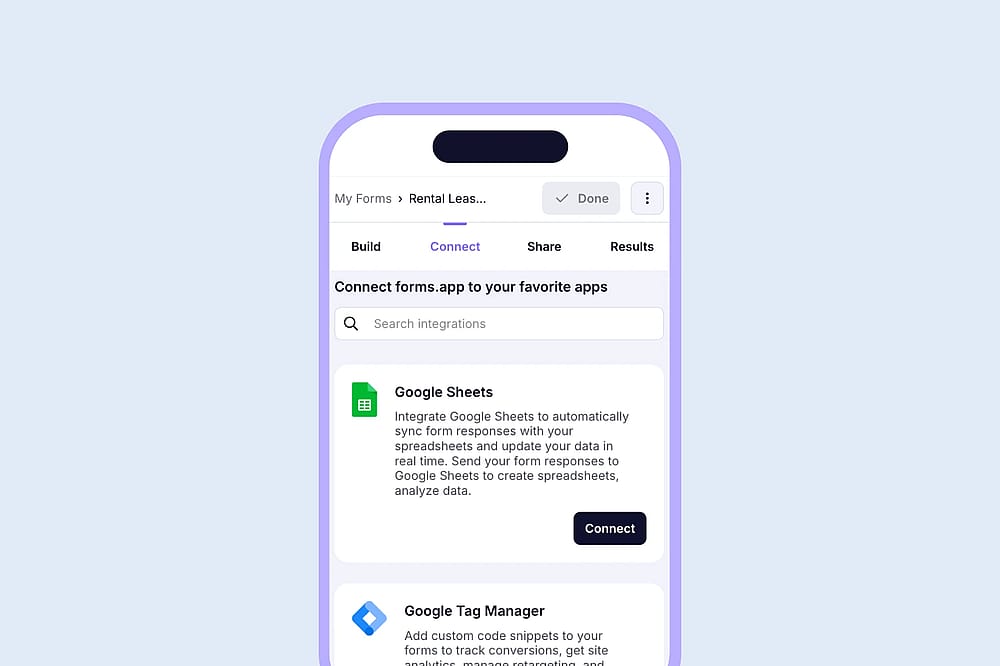
Connect your rental form to other apps
6. Publish and share. Copy the link and send it anywhere: social media, listing sites, or directly to applicants. Responses land in one place, ready to review.
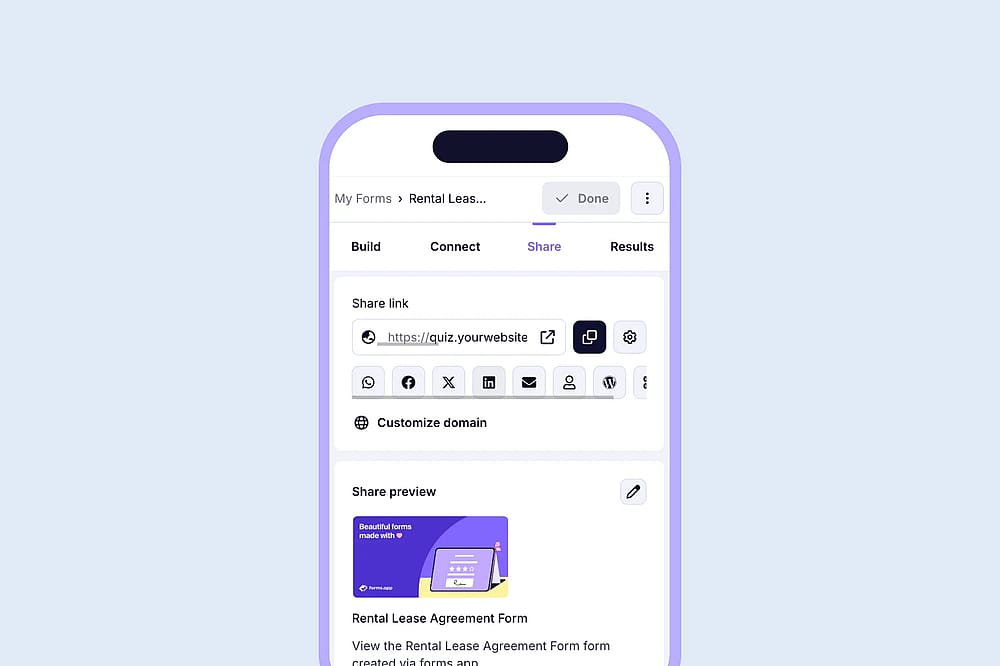
Share your rental form
5 Expert tips for better rental forms
- Use clear language. Skip legal jargon where a plain sentence works just as well.
- Add an authorization step. Get explicit consent before running background or credit checks.
- Request supporting documents. ID and proof of income should be uploadable, not just described.
- Stick to relevant questions. Avoid anything unrelated to the rental itself, like race or religion.
- Set a response deadline. This keeps the process moving and avoids losing good candidates to a stalled decision.
Conclusion
Rental forms, from the first application to the signed agreement, exist to remove guesswork from renting. They save time, but just as importantly, they document the agreement both sides are actually making. Whether you're a landlord building out your first forms for rental property management or a tenant filling one in, having the right structure from the start makes the whole process smoother.
Frequently asked questions
Rent amount, payment schedule, lease duration, deposit terms, and responsibilities for maintenance and repairs, at minimum.
Yes, forms.app supports e-signatures that hold up legally in the same way a handwritten one does, as long as they meet your state's requirements.
A few days is standard. Setting a clear deadline upfront keeps the process fair and avoids leaving good applicants waiting indefinitely.
- August 2026 - Article revised and updated to align with 2026 standards
- Content revised from start to finish and reviewed to meet 2026 standards.
- FAQ section added.
- Visuals renewed throughout the article.
Contributors
Researched & written by
forms.app, your free form builder
- Unlimited responses
- Unlimited questions
- Unlimited team members