
Save up to 60% on yearly plans and enjoy our biggest offer of the year. Limited time only. 🍂
See pricing

10 Best Shopify alternatives: Tested & Reviewed for 2026
Summarize with
Shopify isn't the “one-size-fits-all” solution it used to be. As transaction fees rise and app costs bloat, savvy brands are migrating to platforms that offer more control and better margins. To help you navigate this shift, we spent hours inside the backends of over platforms, building live test stores and stress-testing checkouts to see which ones actually deliver.
In this guide, we dive deep into why modern sellers are moving away from Shopify and reveal our top-vetted alternatives for 2026. We’ll also walk you through nine critical reasons to expand your digital presence today and provide a proven four-step framework to ensure your next platform is the perfect fit for your business.
💡 All tools featured in this content have been updated for 2026 (including features and pricing). Monthly payment options are listed for all tools that offer them.
TL;DR: Best alternatives to Shopify
1. forms.app: Best for teams
2. Wix: Best for drag-and-drop design and AI-assisted site building
3. WooCommerce: Best for WordPress users needing total ownership and flexibility
4. Squarespace: Best for high-end aesthetics and visual-heavy boutique brands
5. BigCommerce: Best for scaling large inventories and enterprise-grade SEO
6. Weebly: Best for simple, low-cost stores and absolute beginners
7. Ecwid: Best for adding a shopping cart to any existing site or social page
8. Magento: Best for complex B2B operations and massive product catalogs
9. Big Cartel: Best for independent artists selling a small number of items
10. PrestaShop: Best for open-source customization and international selling
About Shopify: features & pricing
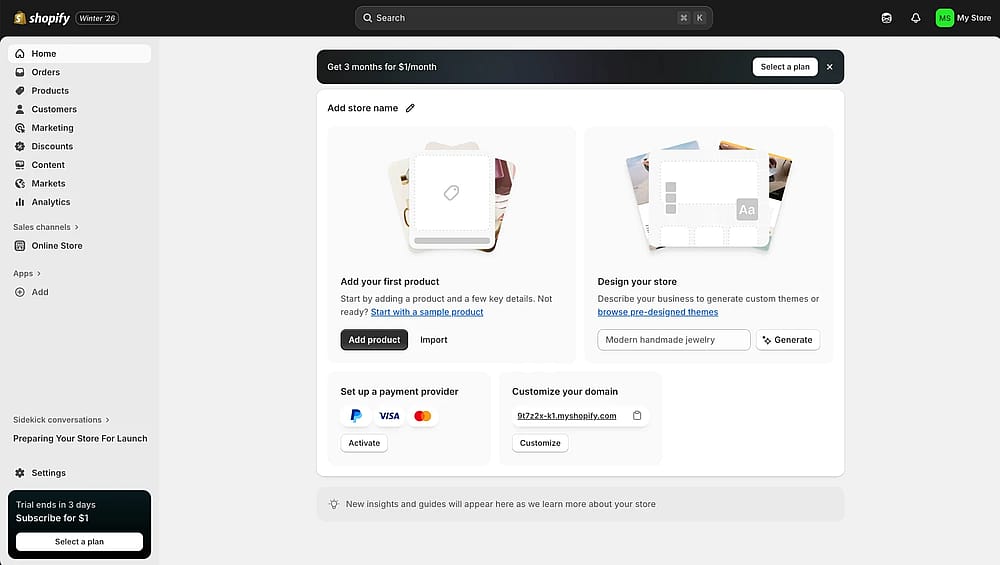
Workspace of Shopify
Shopify is a hosted platform that lets you build and manage an online store without needing technical or coding skills. It handles the “heavy lifting”, hosting, security, and payments, so you can focus on selling.
However, the “Shopify Tax” remains a major drawback. We found that truly scaling requires the Shopify Plus plan (starting at $2,300/month), and costs quickly spiral once you add third-party app subscriptions and external transaction fees. It’s an elite, high-speed engine, but it is increasingly “pay-to-play” for growing brands.
Plan | Monthly Price | Annual Price (mo) | Best For |
Starter | $5 | N/A | Social media & link selling |
Basic | $32 | $29 | New stores & solopreneurs |
Grow | $92 | $79 | Scaling stores & small teams |
Advanced | $399 | $299 | High-volume & global sales |
Plus | $2,300+ | Custom | Enterprise & massive brands |
First glance at paid & free Shopify alternatives
Tool | Best For | Standout Feature | Free Plan? | Key Differentiator |
forms.app | Small businesses & lead gen | Mobile-first interactive order forms | (Lifetime) | Superior speed-to-market and extreme affordability. |
Wix | Design-heavy storefronts | AI-powered site builder (ADI) | (Non-eComm) | Total "pixel-perfect" creative freedom without coding. |
WooCommerce | Tech-savvy WordPress users | Complete data ownership & freedom | (Open Source) | No platform-specific transaction fees or monthly "rent." |
Squarespace | Visual boutiques & creatives | Award-winning, sleek templates | 14-Day Trial | The highest aesthetic standard for "gallery-style" shops. |
BigCommerce | High-volume scaling | 600+ native product variants | 15-Day Trial | Zero transaction fees on any plan, even at enterprise scale. |
Weebly | Absolute beginners | Direct Square POS integration | (Basic) | Lowest technical barrier; ideal for syncing physical shops. |
Ecwid | Multi-channel selling | Add-to-any-site" shop widget | (10 products) | The most flexible "plug-and-play" solution for existing sites. |
Magento | Complex B2B enterprises | Unlimited technical architecture | (Open Source) | Enterprise-grade power for massive, multi-store catalogs. |
Big Cartel | Artists & makers | Minimalist, maker-focused UI | (5 products) | Transparent, simple flat-fee pricing for independent creators. |
PrestaShop | International merchants | Built-in multi-language/EU compliance | (Open Source) | Strongest native tools for global tax and legal compliance. |
10 Best Shopify alternatives
Finding a Shopify free alternative is easy with versatile ecommerce platforms like WooCommerce or Ecwid. This ecommerce solution simplifies payment processing while hosting your ecommerce store, making selling digital products profitable without monthly fees.
1. forms.app (Best for teams)
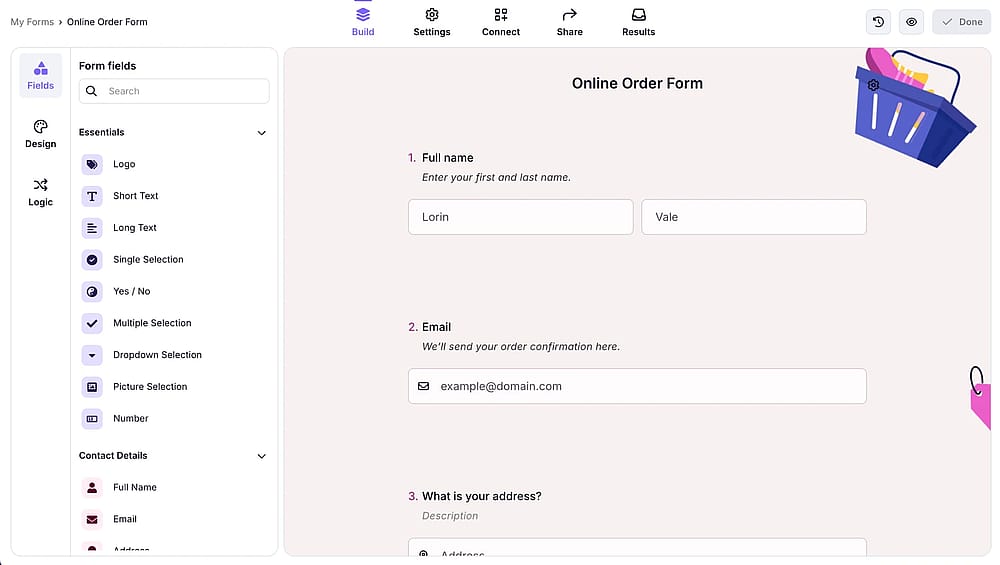
Workspace of forms.app
forms.app is an intuitive online store builder that allows businesses to create professional order forms, lead generation tools, and surveys without any coding knowledge. It focuses on a mobile-first design, ensuring that customers can browse products and complete purchases seamlessly on any device.
Why is forms.app a top pick? It eliminates Shopify’s complex backend for those who need a streamlined, affordable way to sell. We found its setup significantly faster for niche products, offering superior mobile UX and flexible payment integrations without the heavy monthly "SaaS tax."
Key features:
- 0% commission
- Unlimited responses and seats on the free plan
- Free themes & custom CSS
- Connect to Secure payment gateways (Stripe & PayPal)
- Shares updates about shipping
forms.app pricing:
- Free plan: ✅
- Basic plan: $29 per month
- Pro plan: $39 per month
- Premium Plan: $79 per month
2. Wix (Best for drag-and-drop design and AI-assisted site building)
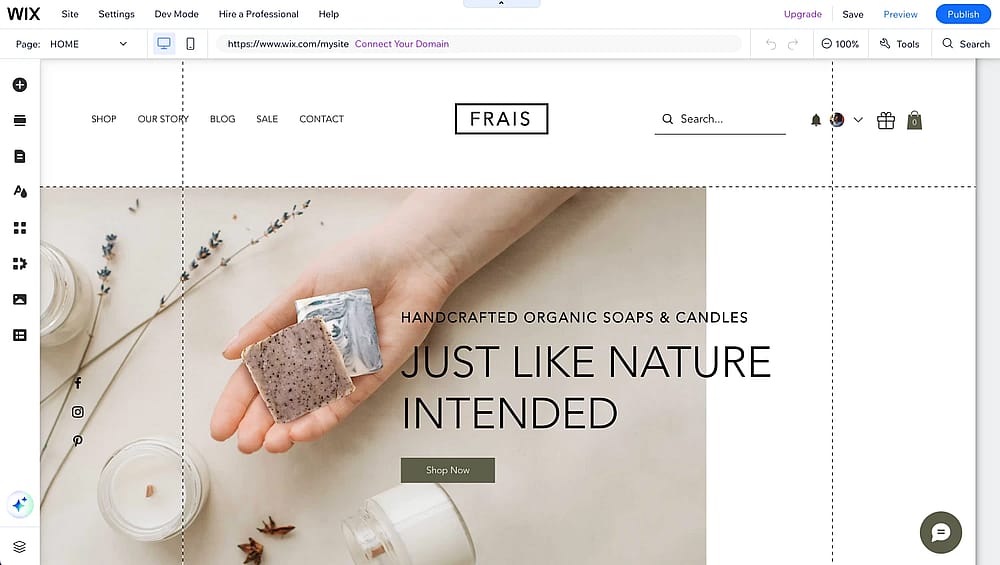
Workspace of Wix
Wix is a highly visual website builder known for its total creative freedom and user-friendly editor. It provides a comprehensive suite of e-commerce tools, including inventory management and marketing automation, all integrated into a single, cohesive dashboard.
Why is Wix a top pick? Unlike Shopify’s rigid template system, Wix allows for pixel-perfect design customization without expensive developers. Our testing showed its AI-driven site builder creates a functional, aesthetically pleasing storefront in minutes, making it more accessible for design-focused small businesses.
Key features:
- Intuitive drag-and-drop visual editor
- Wix ADI (Artificial Design Intelligence)
- Integrated SEO and marketing suite
- Multi-channel selling (Instagram, eBay, Amazon)
- Automated abandoned cart recovery
Wix pricing:
- Free plan: ✅
- Light: $17 per month
- Core: $29 per month
- Business: $939 per month
- Business Elite: $159 per month
3. WooCommerce (Best for WordPress users needing total ownership and flexibility)
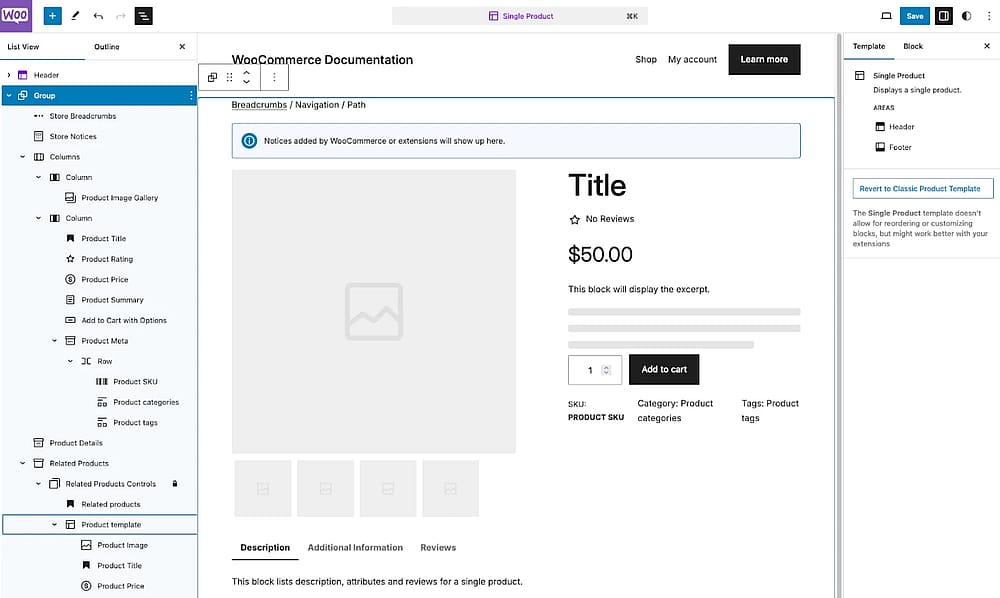
Workspace of WooCommerce (Source: WooCommerce)
WooCommerce is an open-source e-commerce plugin built specifically for WordPress, the world’s most popular content management system. It transforms a standard website into a powerful online store, giving users complete control over their data, hosting, and technical configuration.
Why is WooCommerce a top pick? It offers the “absolute freedom” that Shopify lacks by removing forced monthly subscriptions and transaction fees. We found it significantly better for SEO-heavy brands that want to own their platform entirely while accessing thousands of free and paid extensions to customize every detail.
Key features:
- Full ownership of store data and code
- Seamless WordPress integration for blogging
- Huge library of extensions and themes
- Built-in blogging and content marketing tools
- No platform-specific transaction fees
WooCommerce pricing:
- Free plan: ✅
- Custom pricing
4. Squarespace (Best for high-end aesthetics and visual-heavy boutique brands)
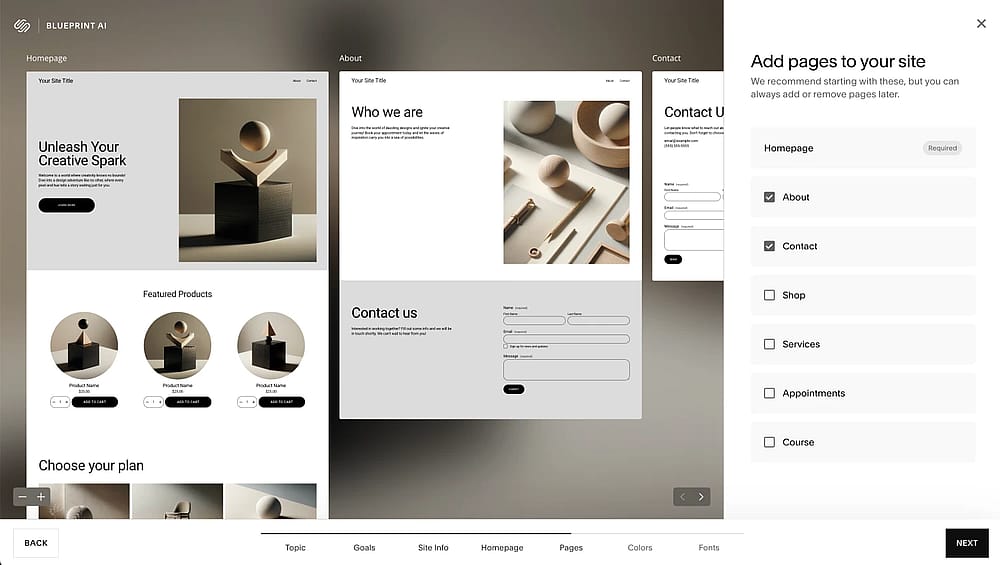
Workspace of Squarespace
Squarespace is a design-centric website builder that provides sleek, professionally crafted templates integrated with solid e-commerce tools. It is an all-in-one solution that includes hosting, domains, and 24/7 support, making it a favorite for creatives and photographers who want their products to look like a curated gallery.
Why is Squarespace a top pick? It beats Shopify in pure visual impact and lower starting costs. In our testing, its “Blueprint AI” created stunning storefronts that felt custom-made, avoiding the generic look of basic Shopify themes without requiring expensive third-party apps for core aesthetics.
Key features:
- Designer-quality, mobile-responsive templates
- Intuitive "Fluid Engine" drag-and-drop editor
- Built-in Acuity Scheduling for service bookings
- Integrated social media and email marketing tools
- Zero transaction fees on higher-tier plans
Squarespace pricing:
- Free plan: ✅
- Basic: $25 per month
- Core: $36 per month
- Plus: $56 per month
- Advanced: $139 per month
5. BigCommerce (Best for scaling large inventories and enterprise-grade SEO)
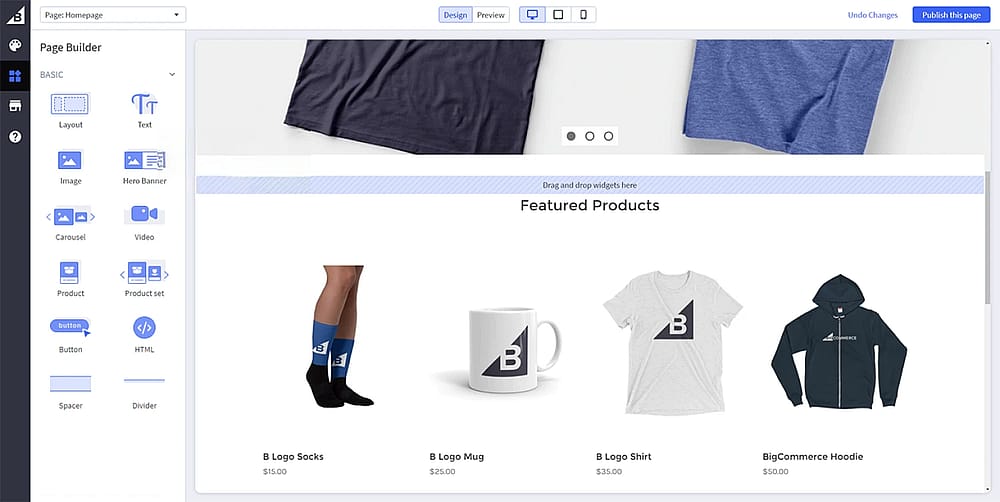
Workspace of BigCommerce (Source: BigCommerce)
BigCommerce is a robust, open-SaaS platform designed to handle high-volume sales and complex product catalogs right out of the box. Unlike many other platforms, it prioritizes "native" features, meaning you get advanced functionality like multi-storefront management and complex filtering without needing to install dozens of plugins.
Why is BigCommerce a top pick? It is the ultimate "Shopify Tax" killer for high-growth brands because it charges zero transaction fees on any plan. Our evaluation found its native SEO tools and multi-currency support far more advanced than Shopify's, allowing for massive scaling with significantly lower monthly app overhead.
Key features:
- Up to 600 product variants natively supported
- Advanced, fully customizable SEO URL structures
- Built-in B2B wholesale and customer grouping
- Multi-storefront management from one dashboard
- Robust API for headless commerce integrations
BigCommerce pricing:
- Free plan: ❌ (15-day free trial)
- Standard: $39 per month
- Plus: $105 per month
- Pro: $399 per month
- Enterprise: Custom pricing
6. Weebly (Best for simple, low-cost stores and absolute beginners)
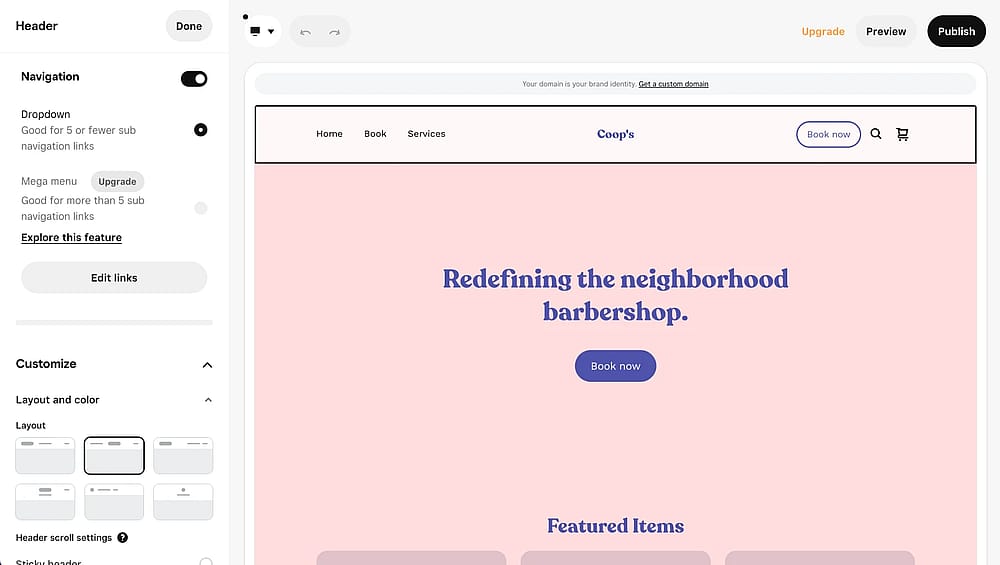
Workspace of Weebly
Weebly is a straightforward, beginner-friendly website builder owned by Square, which focuses on extreme ease of use and affordability. It uses a simple "what-you-see-is-what-you-get" editor that lets anyone launch a basic online store in a single afternoon without touching a line of code.
Why is Weebly a top pick? It is far more cost-effective for small projects and hobbyists who find Shopify’s ecosystem overwhelming and expensive. We found its integration with Square POS perfect for local sellers who need a unified, low-maintenance way to sync their physical and digital inventory.
Key features:
- Ultra-simple drag-and-drop site editor
- Direct integration with Square Point of Sale (POS)
- Automatic mobile site optimization
- Built-in simple inventory and tax calculators
- Affordable "Professional" plan for small businesses
Weebly pricing:
- Free plan: ✅
- Personal: $13 per month
- Professional: $16 per month
- Performance: $29 per month
7. Ecwid (Best for "Plug-and-Play" commerce on any existing website or social page)
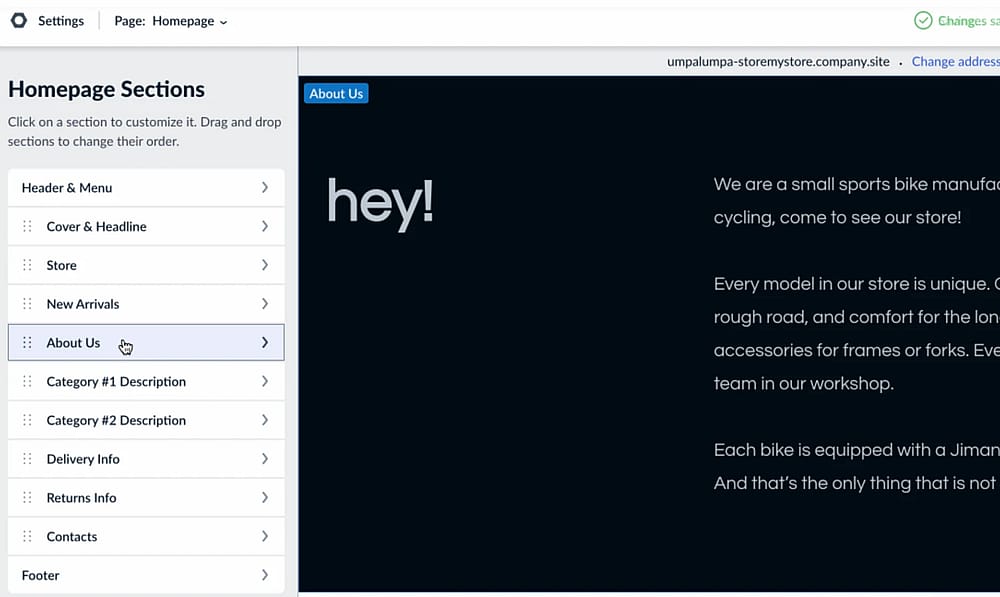
Workspace of Ecwid
Ecwid is a versatile e-commerce widget designed to integrate seamlessly into any existing website, whether it's built on WordPress, Wix, or even a basic HTML page. It allows users to add a functional shopping cart to their current site without the need to rebuild from scratch.
Why is Ecwid a top pick? Unlike Shopify, which requires you to move your entire site to its ecosystem, Ecwid lets you keep your current design. We found it significantly cheaper for small catalogs, offering a "forever free" plan and zero transaction fees on external gateways.
Key features:
- Seamless integration with any CMS or site builder
- Multi-channel selling across Facebook, Instagram, and TikTok
- "Forever Free" plan for up to five products
- Point of Sale (POS) integration for in-person sales
- Automated language translation for international shoppers
Ecwid pricing:
- Free plan: ✅
- Starter: $5 per month
- Venture: $30 per month
- Business: $55 per month
- Unlimited: $130 per month
8. Magento / Adobe Commerce (Best for enterprise-level B2B and complex catalogs)
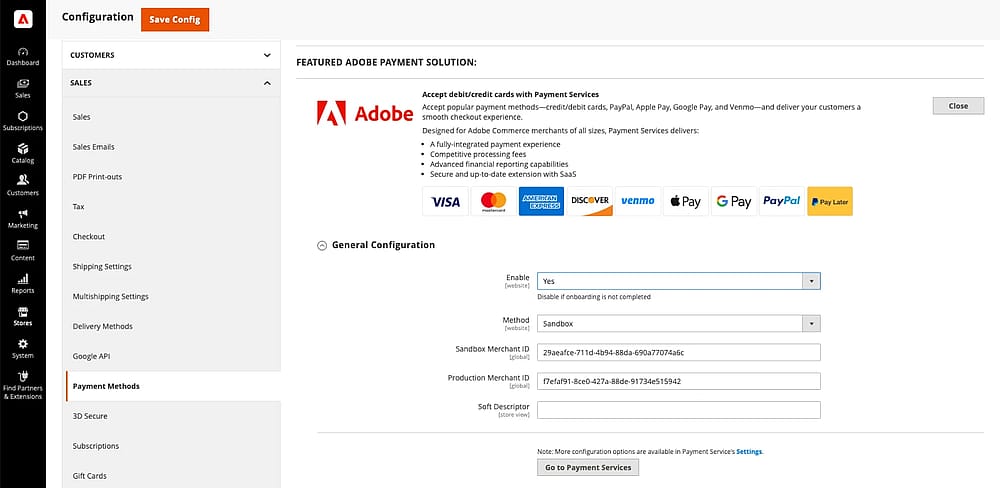
Homepage of Magento (Source: Adobe)
Magento, now part of Adobe Commerce, is a highly powerful, open-source e-commerce platform built for large-scale enterprises that require complete control over their store’s architecture. It offers unparalleled flexibility for businesses managing thousands of SKUs and complex international operations.
Why is Magento a top pick? It provides total technical sovereignty that Shopify’s "closed" system cannot match. Our tests showed that for massive B2B operations with custom workflows, Magento avoids the restrictive "Plus" pricing and offers deeper native customization for complex product attributes and tiered pricing.
Key features:
- Highly flexible open-source architecture
- Advanced native B2B functionality and wholesale tools
- Multi-store, multi-currency, and multi-lingual management
- Robust SEO controls and custom URL structuring
- Massive global developer community and extension marketplace
Magento pricing:
- Free plan: ❌
- Custom pricing
9. Big Cartel (Best for independent artists and makers with small catalogs)
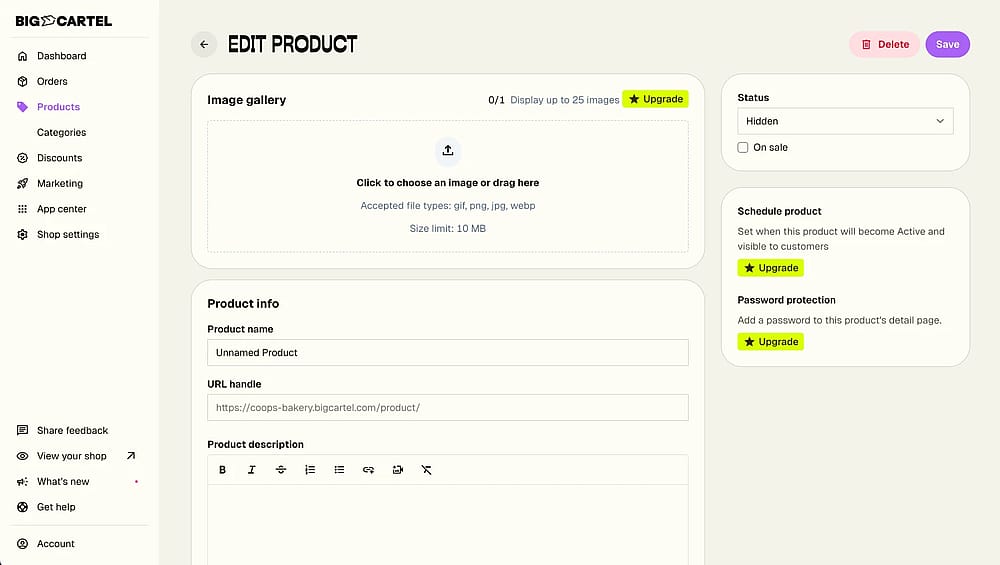
Workspace of Big Cartel
Big Cartel is a niche e-commerce platform specifically designed for creators, musicians, and independent makers who need a simple, no-frills way to sell their work. It prioritizes minimalism and affordability, focusing on the core essentials needed to run a small artist-led boutique.
Why is Big Cartel a top pick? It is the most honest alternative for creators who find Shopify’s monthly costs and transaction fees prohibitive. We found its "gold" plan perfect for artisans; it’s one of the few platforms that remains genuinely free for your first five products.
Key features:
- "Always Free" plan for small-scale sellers
- Clean, artist-friendly themes with simple customization
- Real-time sales stats and basic SEO tools
- Direct checkout via Stripe or PayPal
- Inventory tracking and discount code support (paid plans)
Big Cartel pricing:
- Free plan: ✅
- Platinum: $15 per month
- Diamond: $30 per month
10. PrestaShop (Best for open-source customization and international selling)
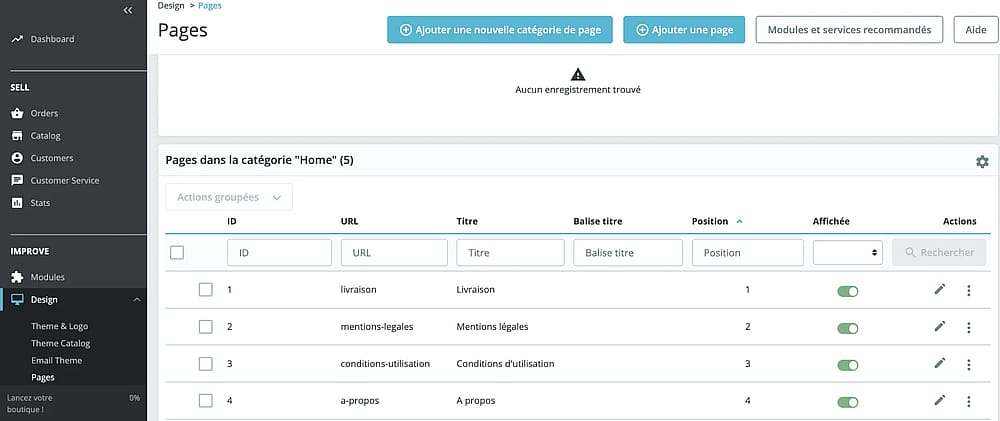
Workspace of PrestaShop (Source: PrestaShop)
PrestaShop is a popular open-source e-commerce solution that offers a high degree of flexibility for merchants who want to self-host their stores. It is particularly strong in the European market, featuring built-in tools for international compliance, taxes, and multi-language support.
Why is PrestaShop a top pick? It offers a middle ground between the simplicity of Shopify and the complexity of Magento. During our evaluation, we found its modular system allows for high-level customization without the recurring subscription costs, making it ideal for budget-conscious brands with technical skills.
Key features:
- Over 600 built-in features for store management
- Advanced multi-language and multi-currency support
- Modular architecture with thousands of add-ons
- Self-hosted option for total data ownership
- Dedicated SEO and marketing modules
PrestaShop pricing:
- Free plan: ✅
- Hosted: from €14 per month
- Enterprise: from €2,115 per month
Final verdict: Which tool is your 2026 winner?
Choosing a Shopify alternative isn't about finding the "best" software; it’s about matching your specific operational pain points. After weeks of stress-testing these 10 platforms, our team found that the market has shifted toward two clear paths: unrestricted creative freedom or lower overhead costs.
- For Absolute Value: forms.app is our top pick for simple, high-converting checkout flows without the SaaS bloat.
- For Design Freedom: Wix or Squarespace offer best-in-class aesthetics for brands that want to stand out visually.
- For Scale & SEO: BigCommerce provides the enterprise-grade power needed for large inventories without transaction fee penalties.
- For Total Ownership: WooCommerce or PrestaShop remain the gold standard for merchants who want complete control over their code and data.
Choosing the right platform is the single most important infrastructure decision you'll make this year; pick the one that protects your margins and gives you the freedom to grow on your own terms.
Frequently asked questions (FAQs)
Yes. If you purchased your domain through Shopify, you must "unlock" it in your domain settings and transfer it to a new registrar (like Namecheap or Cloudflare) before deactivating your store. If you used a third-party registrar to begin with, you simply point your DNS records to your new platform’s servers.
Not if you use 301 redirects. This is the most critical step of any migration.
For small businesses looking for the best ROI, forms.app is the top choice. Unlike Shopify, which can be overwhelming with its complex backend and high monthly costs, forms.app provides a streamlined, mobile-first experience.
Contributors
forms.app, your free form builder
- Unlimited responses
- Unlimited questions
- Unlimited team members