
Save up to 60% on yearly plans and enjoy our biggest offer of the year. Limited time only. 🍂
See pricing

Meta Pixel Integration
Meta Pixel, formerly known as Facebook Pixel, is a powerful platform to track user behaviors, measure campaign performance, and more. By connecting your forms to Meta Pixel, you can get detailed information and track conversions.
How to connect your forms with Meta Pixel
Integrating Meta Pixel into your forms is fairly simple and only takes a few steps.
Before moving on…
Make sure you have
A Meta account with Meta Ads Manager access (If you’re yet to set up Meta Pixel, check out Meta’s guide)
A form ready to be shared
And lastly, a forms.app Premium Plan with a custom domain set
1. Log in to your Meta Business account and choose Domains under Brand safety and suitability:
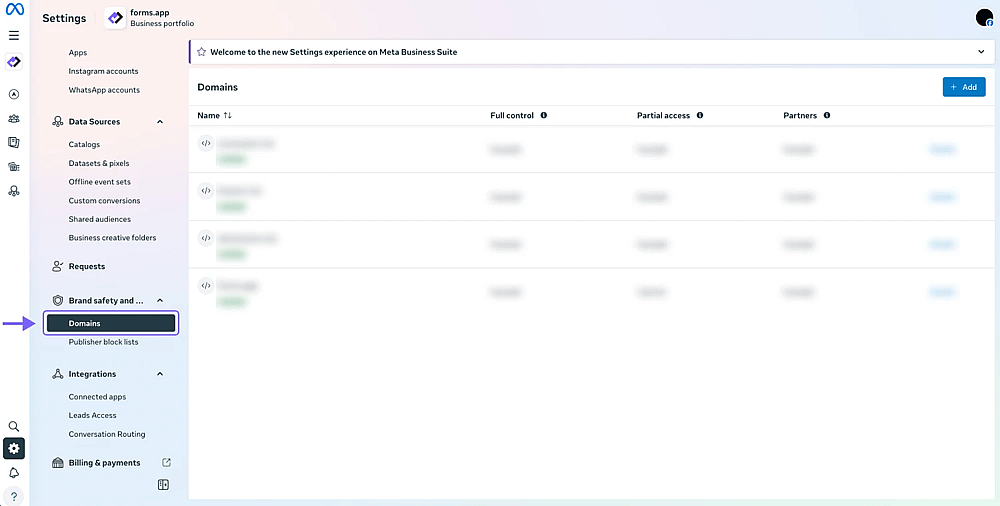
An image showing the “Meta account” interface, where you will find the “Domains” under “Brand safety and suitability” on the left settings menu
2. Next, create a new domain by clicking the button:
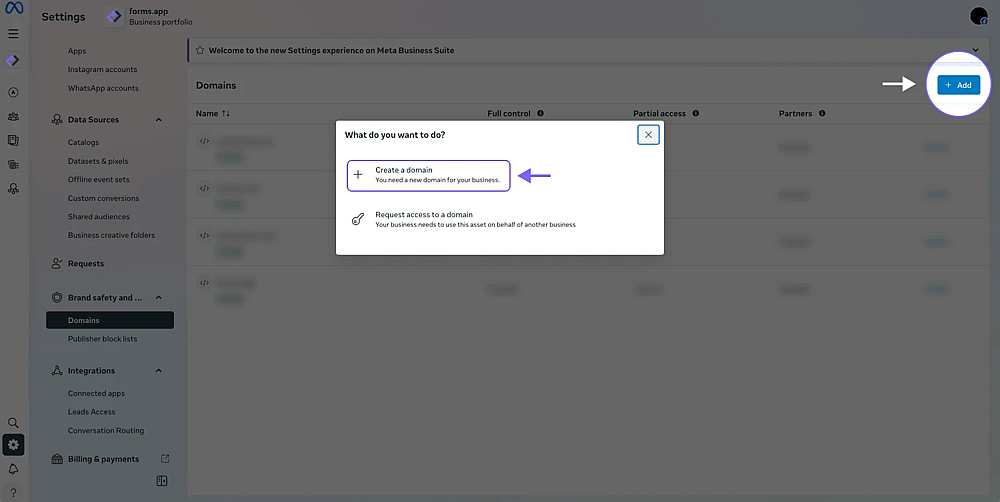
An image showing the “Domains” option, which you need to click, and then press the “Create a domain” button at the top
3. Enter the domain name you have registered for your forms on forms.app (e.g., form.acme.com):
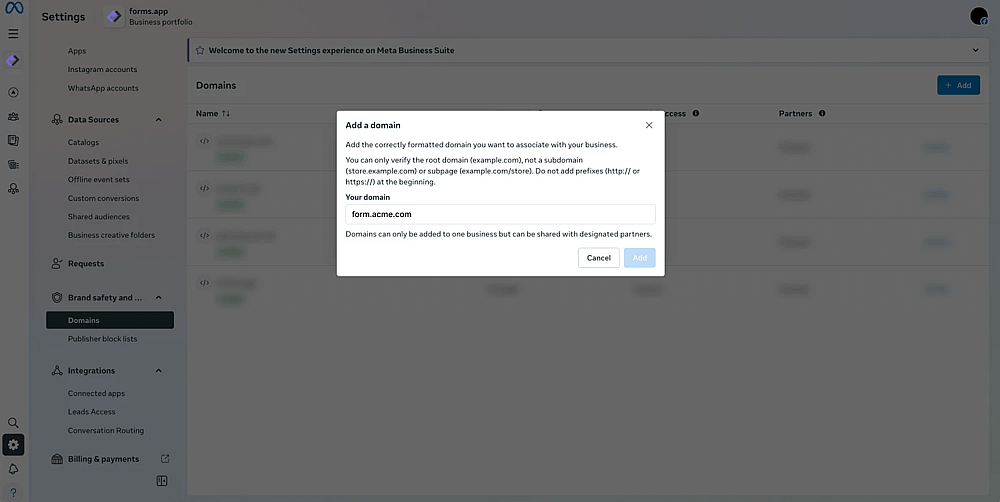
An image showing the pop-up appearing, which allows you to enter the domain name you have registered for your forms on forms.app
4. After adding the domain, open the menu under Verify your domain and choose Upload an HTML file to your root directory:
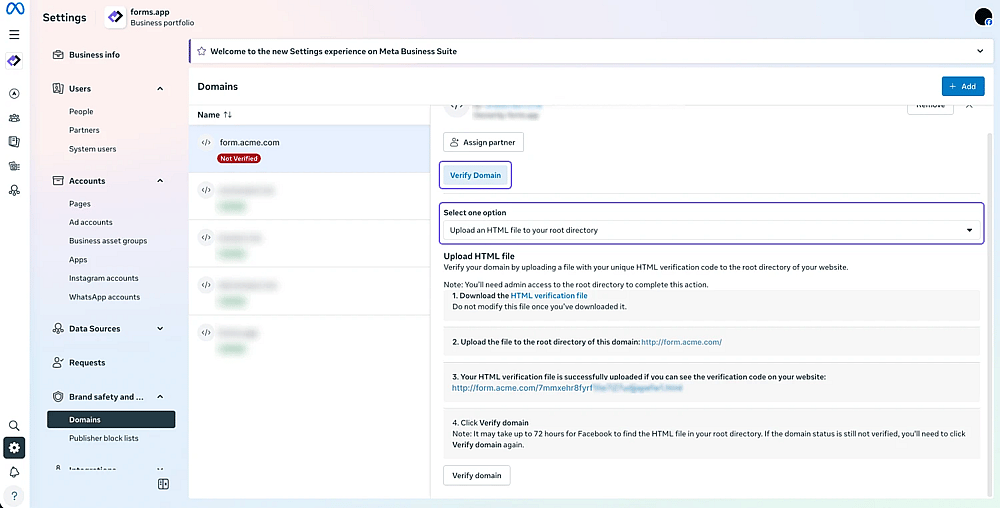
An image showing the dropdown menu under the “Verify domain” area, where you need to select the “Upload an HTML file to your root directory” option
5. On this screen, you can find the HTML verification file. Make sure to copy it for later:
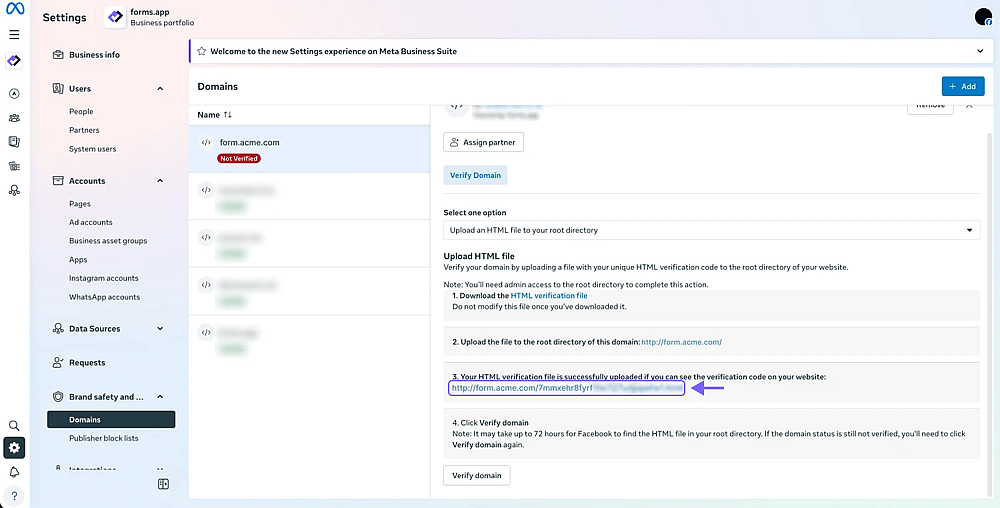
An image showing the location of the “HTML verification file” on the screen appeared, which you must copy for later
6. After that, go to the Datasets & pixels under Data Sources:
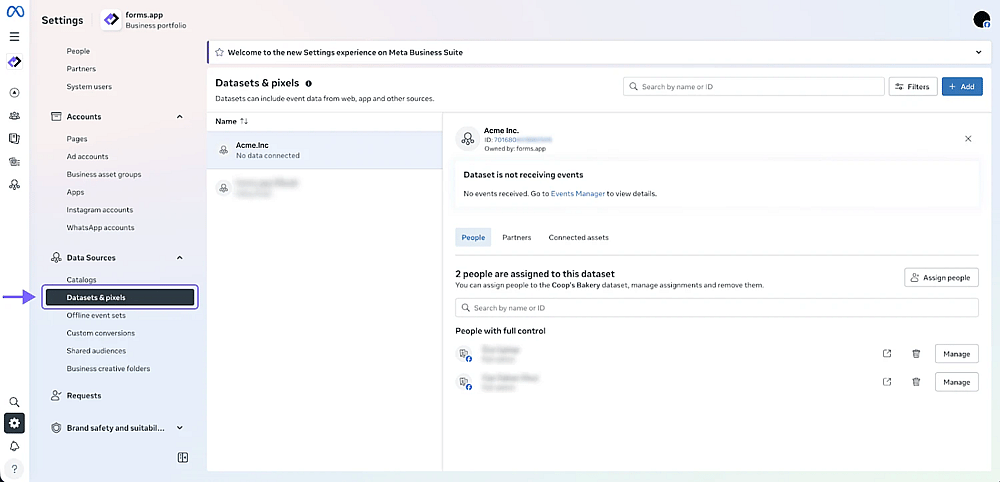
An image showing the “Meta account” interface, where you will find the “Datasets & pixels” option under “Data Sources,” on the left settings menu
7. Here, you can see your Pixel ID and copy it:
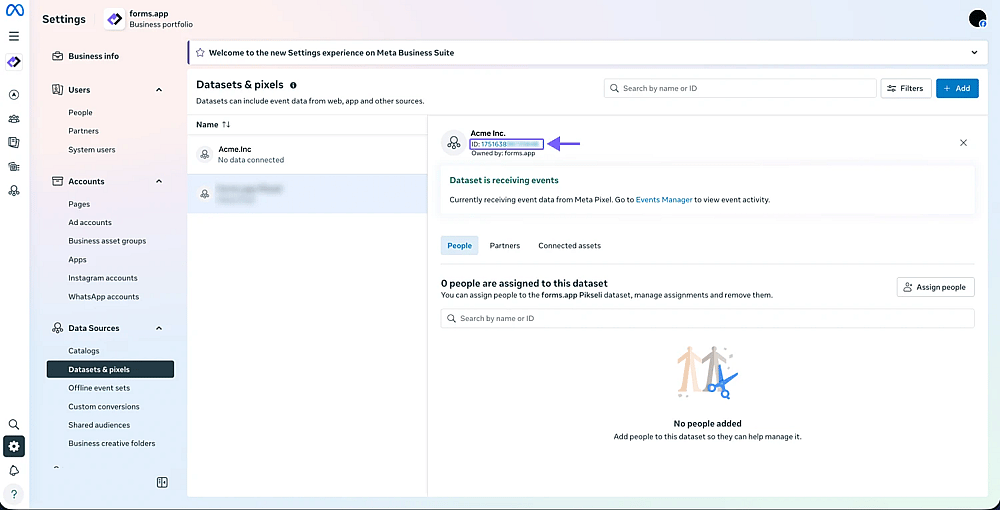
An image showing the area on the screen, where you can view your “Pixel ID” and copy it
8. Next, click the Connect tab and scroll down, and find the Meta Pixel integration after completing your form:
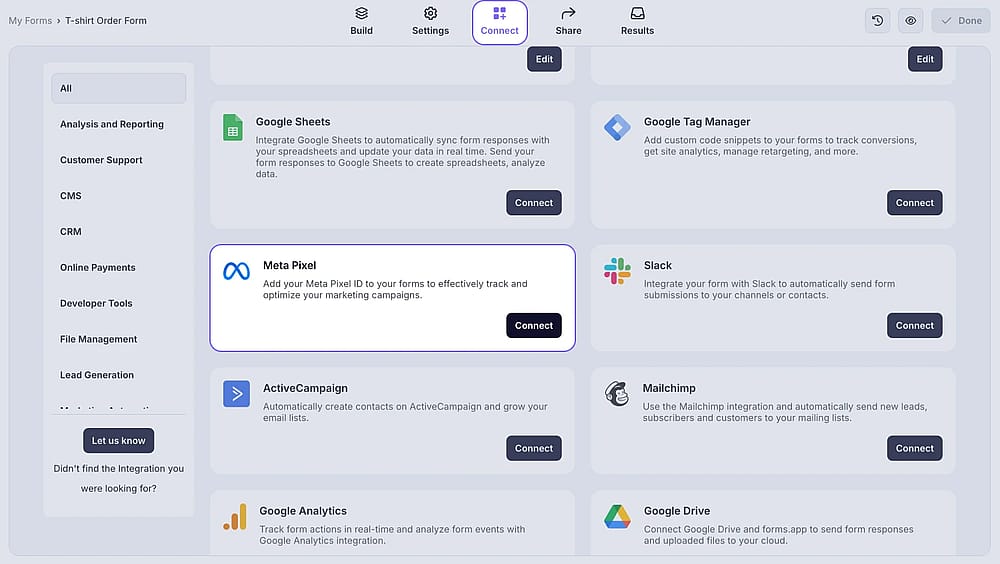
An image showing the “Meta Pixel integration” button, which you can easily find by accessing the “Connect” tab
9. Lastly, paste your Pixel ID and the verification URL you saved earlier. Then, open the consent mode for accurate results:
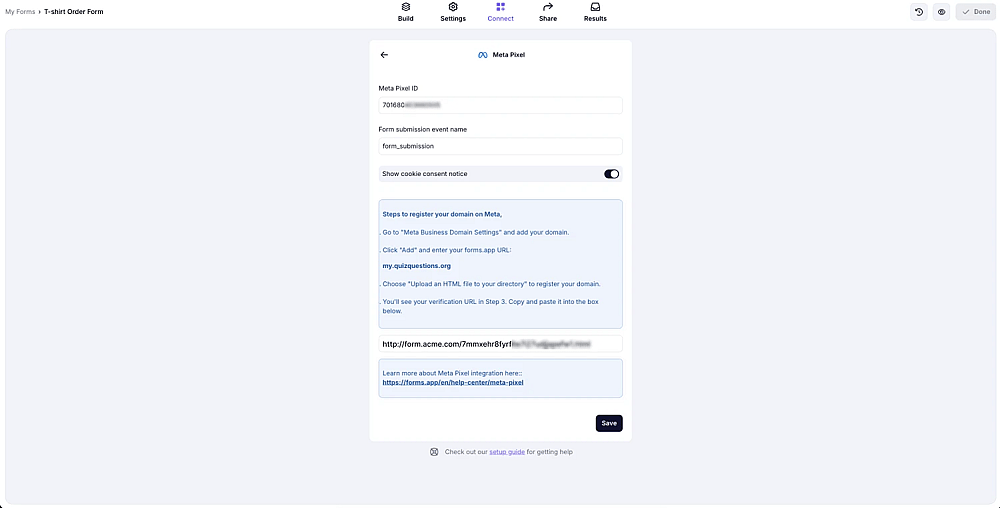
An image showing the “Connect” section in forms.app, where you can paste your “Meta Pixel ID” and enable the “Show cookie consent notice” toggle
10. Once done, you can test your pixel by firstly pressing the Events Manager button after accessing the Datasets & Pixels tab:
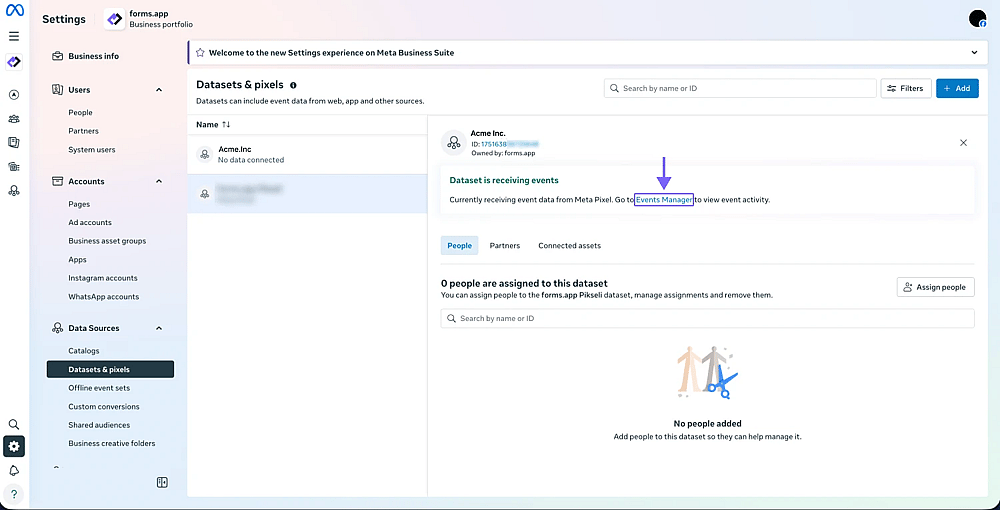
An image showing the “Events Manager” button in the “Datasets & Pixels” tab, where you can open the page to check the status of your pixels
11. After that, press the Test Events button to check your pixels:
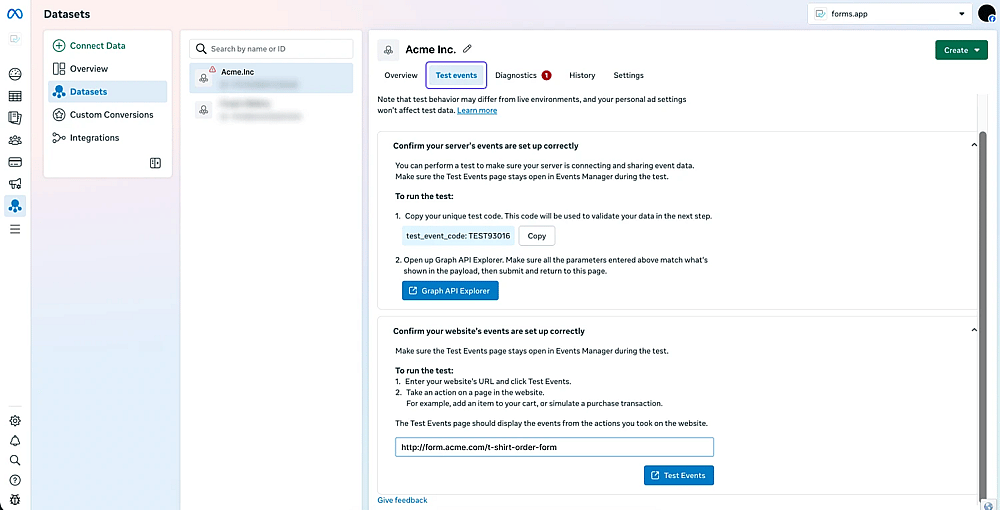
An image showing the “Test event” button that you need to click
12. On the page that appears, you will be able to view the statuses of your pixels:
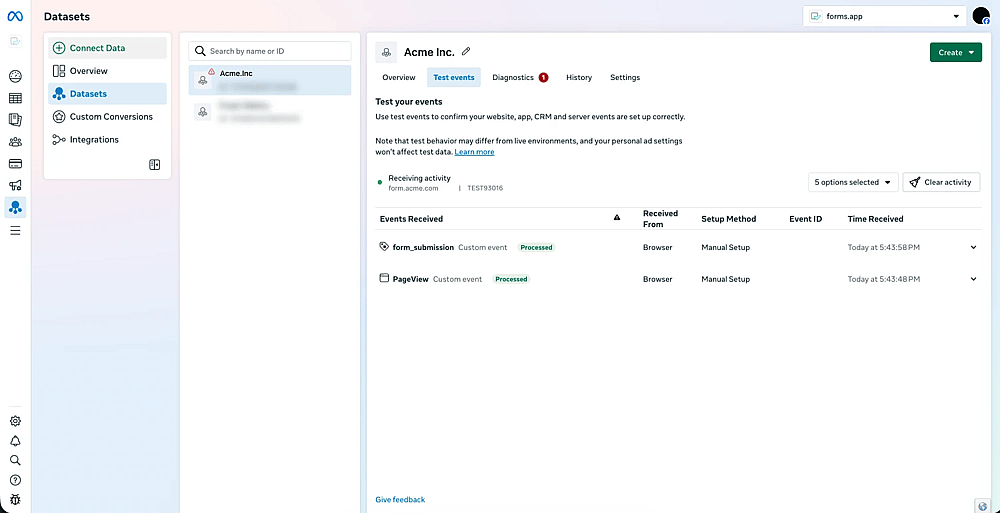
An image showing the page where your pixel status will be visible for you to check
That’s it! You can now integrate Meta Pixel into your forms to track them and measure your performance.
Yes, Meta Pixel works on embedded forms. However, for the integration to function properly, you need to embed your form using the Script method.