Save up to 60% on yearly plans and enjoy our biggest offer of the year. Limited time only. 🍂
See pricing

How to send Google Form responses to multiple email addresses (5 Methods)
Summarize with
TL;DR
You can send Google Form responses to multiple email addresses using these 5 methods:
1. Adding collaborators to Google Forms and asking them to turn on notifications
2. Syncing with Google Sheets and enabling notifications there
3. Installing a form notifications add-on
4. Adding Google Apps script (For advanced users)
5. Setting up workflows through third-party automation tools (Zapier, Make, n8n)
Or you can use a form builder app that supports sending notifications to multiple email addresses, like forms.app. See how to set form notifications for multiple emails on forms.app.
Sending Google Forms notifications to multiple email addresses is a real pain that Google needs to solve. Luckily, there are methods… And alternatives.
Imagine you've built a Google Form for a job application, event registration, or customer inquiry. The moment someone submits it, three different people on your team need to know; let’s say your HR manager, your office coordinator, and yourself. But only one email shows up in one inbox, as Google Forms only sends response notifications to the form creator by default.
In this guide, I will walk you through how to set up your form to send multiple email addresses, with every practical method: From a quick manual workaround to a developer-level solution. So you can pick the method that fits your team. I'll also show how forms.app handles this natively, without any of the workarounds.
Can Google Form responses be sent to multiple email addresses?
Yes, but with extra steps. When a new response comes in, Google Forms will automatically email the form owner. That's where the native notification system ends.
Collaborators who have been added to the form can opt themselves into notifications, but each person has to do it individually. The form owner can't configure this on their behalf or manage a central recipient list.
On top of that, there are some other practical ways to get form response notifications to multiple people, each with different tradeoffs in setup time, reliability, and cost.
Why send email notifications to multiple addresses? (and when)
Before jumping into the methods, it's worth recognizing how common this need actually is. Here are a few situations where a single notification simply doesn't work:
- General team collaboration: It's a good practice to send notifications to all parties to ensure that everyone is aware of the form submissions and no one is left out of the loop. Forwarding emails or letting them know manually is error-prone, slow, and just doesn’t cut it.
- Record Keeping across departments: You can create several records of the form submissions by sending notifications to various locations. These records can be used for auditing or archiving purposes.
- Customer service: If multiple support agents share responsibility for inbound requests, a centralized notification ensures no submission falls through the cracks.
How to send Google Form responses to other email addresses
You can send Google Form responses to other email addresses by setting up a notification email in the form's settings, or you can use add-ons as well. These are the easiest ways to send google form responses to other email addresses, which are given and explained below. Here are some methods you can use to send google form responses to other email addresses:
Method 1: Adding collaborators and asking them to turn on notifications (No add-ons needed)
This is the simplest approach for small teams. As the form owner, you add each team member as a collaborator on the form. Once they have access, each person can opt in to receive email notifications whenever a new response comes in. Importantly, this is something each collaborator must do themselves; you can't configure it for them.
1. Open a Google Form and click the share icon (with a person and + sign) in the top-right corner.
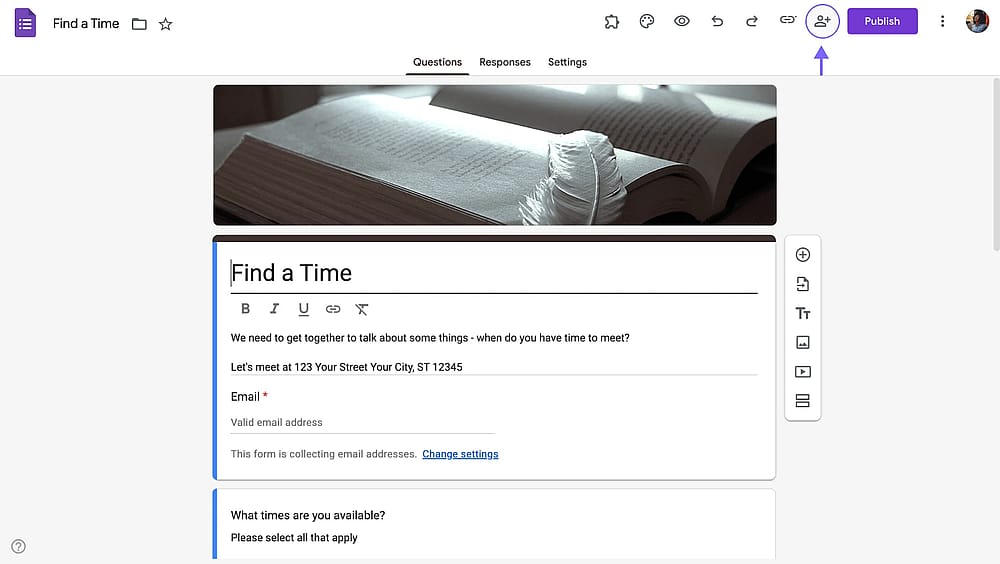
The location of the share button on Google Forms
2. Add new collaborators by typing their email addresses. It is the same process as sharing a Google Doc.
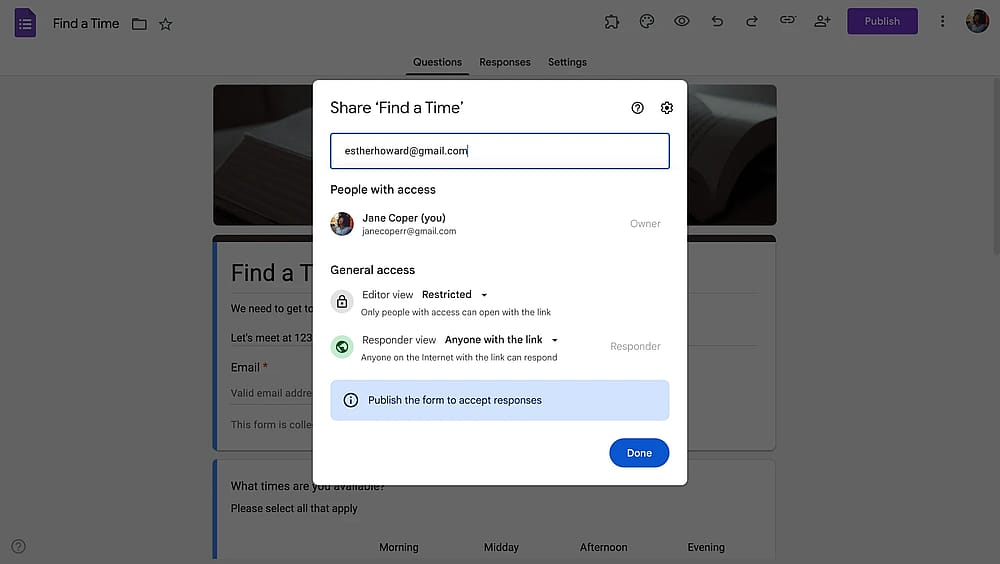
Adding collaborators to Google Forms
3. Change their permission level to editor.
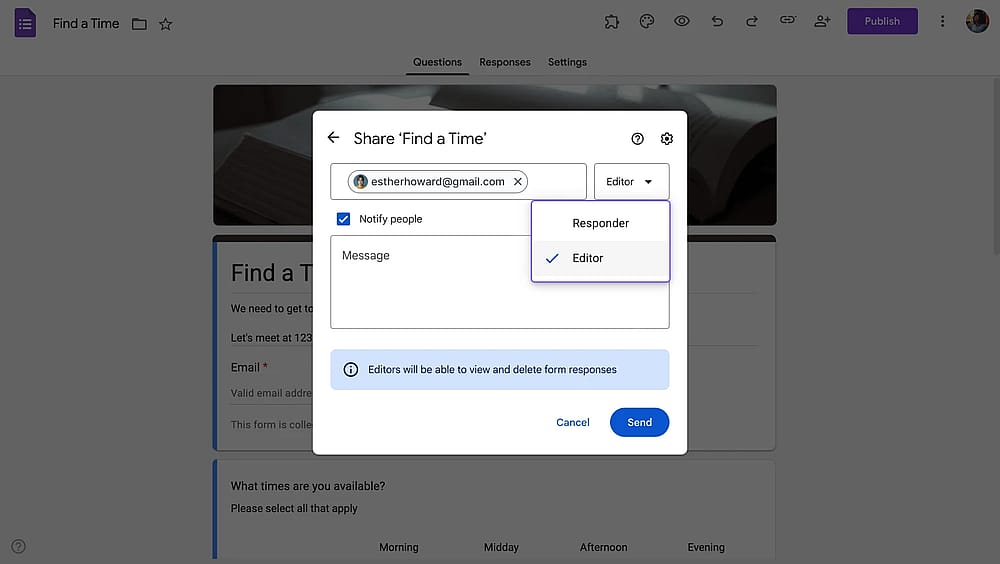
Changing the permission level when inviting a collaborator to Google Forms
4. Click Send.
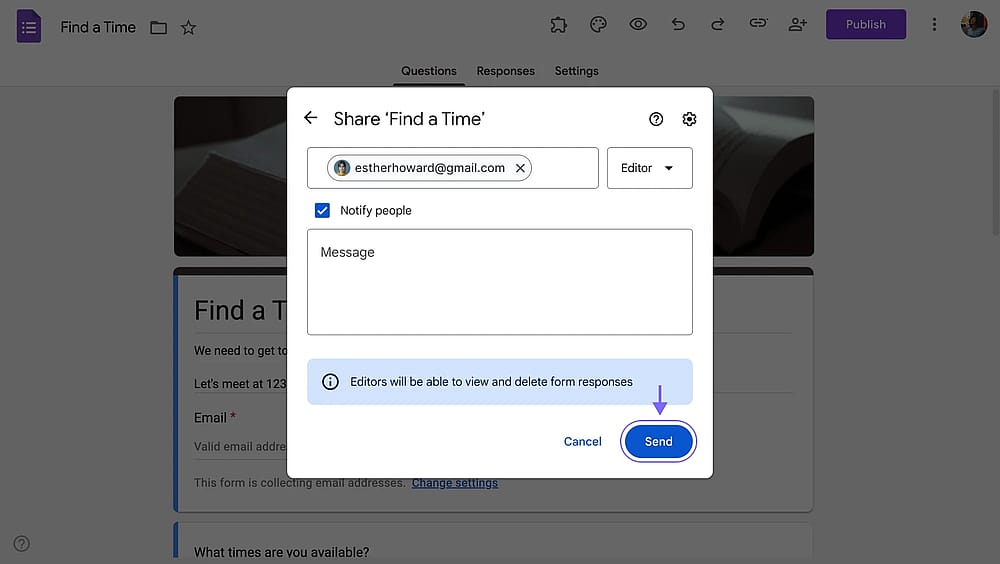
The location of the send button within form share pop-up
Steps for each collaborator to enable their own notifications:
5. Open the shared Google Form abd click the Responses tab.
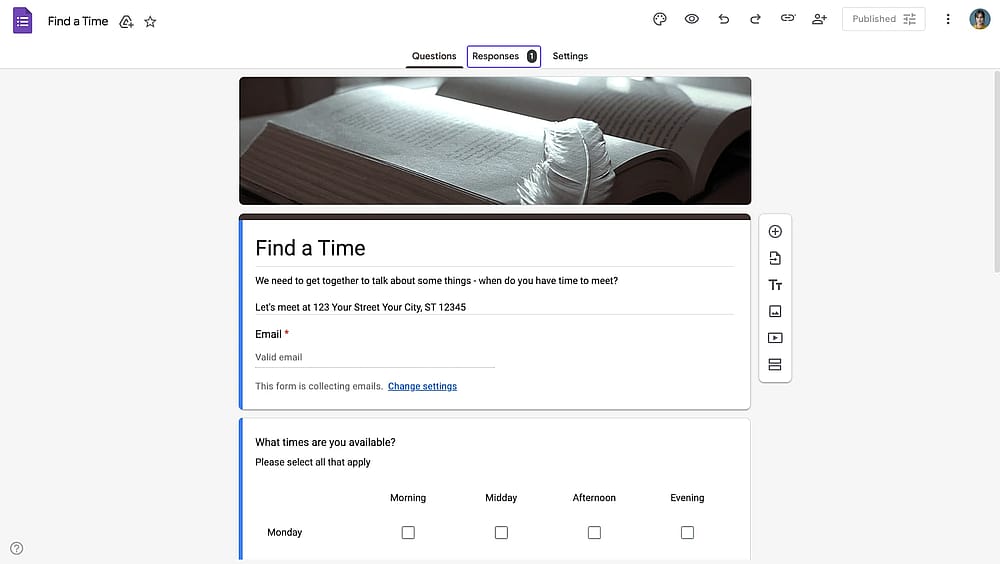
The location of responses tab on Google Forms
6. Click the three-dot icon in the top-right of the Responses section
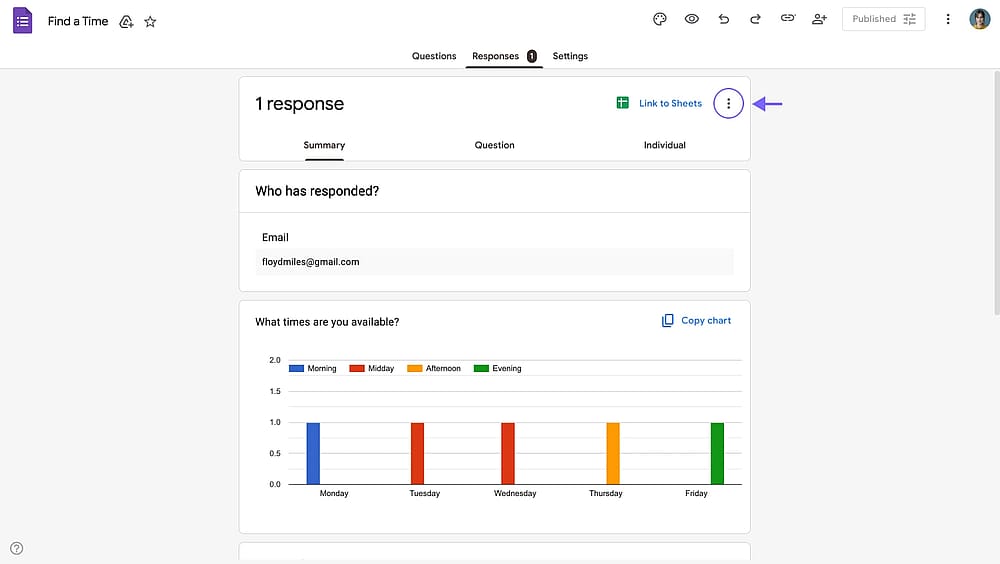
The location of the three dots icon under the responses tab
7. Select Get email notifications for new responses.
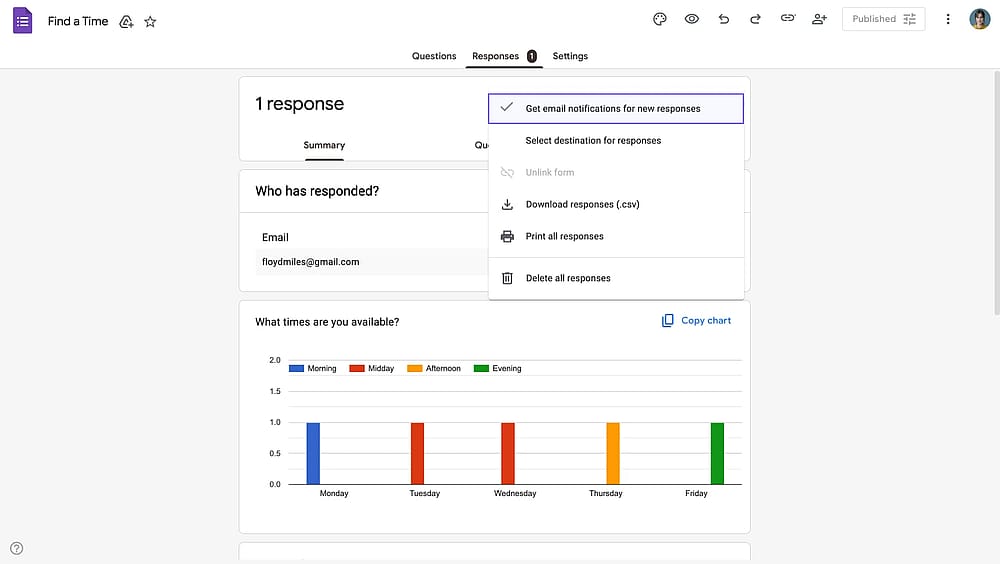
The “Get email notifications” option under the three dots menu
Best for: Small, trusted teams of two or three people who can each complete this setup themselves.
Limitations: This doesn't scale well. Every new team member has to opt in manually. You can't centrally manage the recipient list, and collaborators with Viewer access can't enable notifications at all.
Method 2: Google Sheets + notification rules
The “Google Sheets + notification rules” method avoids the add-on reliability problem entirely by using Google Sheets as the notification layer. It takes a few more steps to configure, but the result is a more stable workflow.
You link your Google Form to a Google Sheet so responses are recorded there automatically. You then share that Sheet with all the people who need to be notified. Each person subscribes to "new row" notifications in Sheets, so they receive an email whenever the Sheet is updated.
Step 1: Link your Google Form to a Google Sheet
- Open your Google Form and click the Responses tab.
- Click the Google Sheets icon (Link to Sheets).
- Choose Create a new spreadsheet or select an existing one, then click Create.
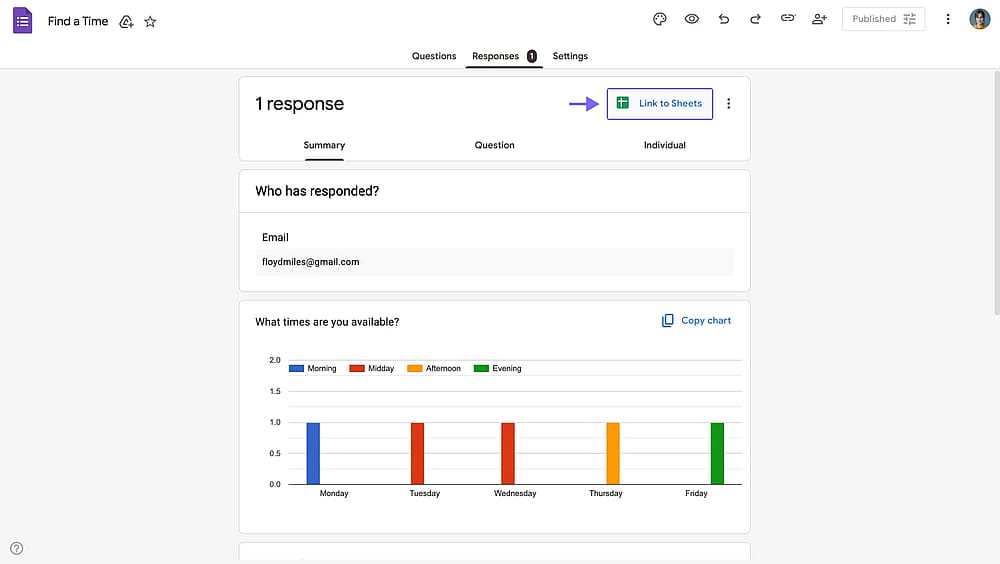
The location of “Link to Sheets” option on Google Forms
Step 2: Share the Google Sheet with your team
- Open the linked Google Sheet.
- Click Share in the top-right corner.
- Add the email addresses of everyone who should receive notifications and set their access to at least Viewer.
- Click Send.
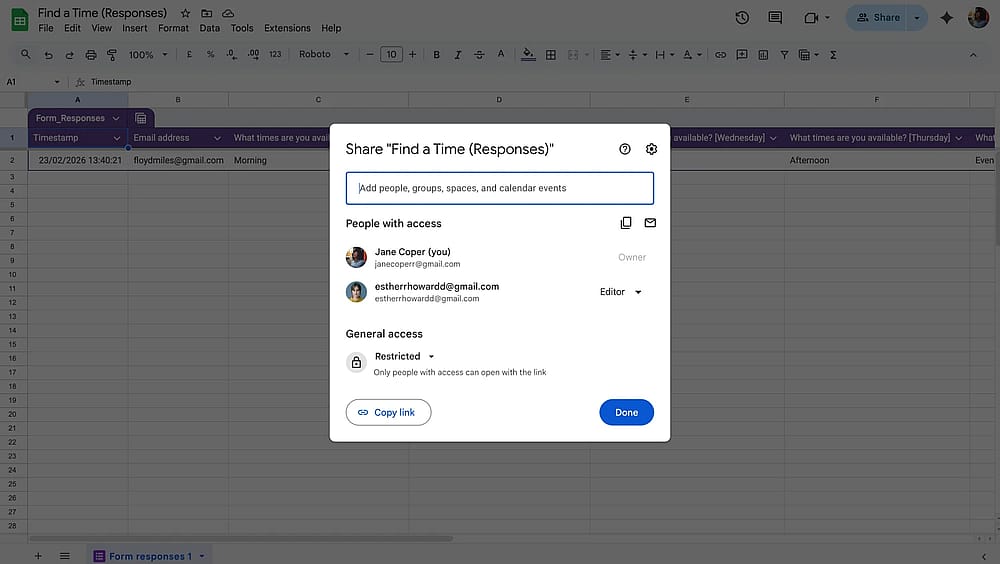
Sharing Google Sheets with your team
Step 3: Each recipient subscribes to notifications
Each shared user can then set up their own notification preferences:
- In the Google Sheet, go to Tools → Notification settings → Edit notifications.
- Choose Any changes are made or A user submits a form.
- Select whether to receive notifications immediately or in a daily digest.
- Click Save.
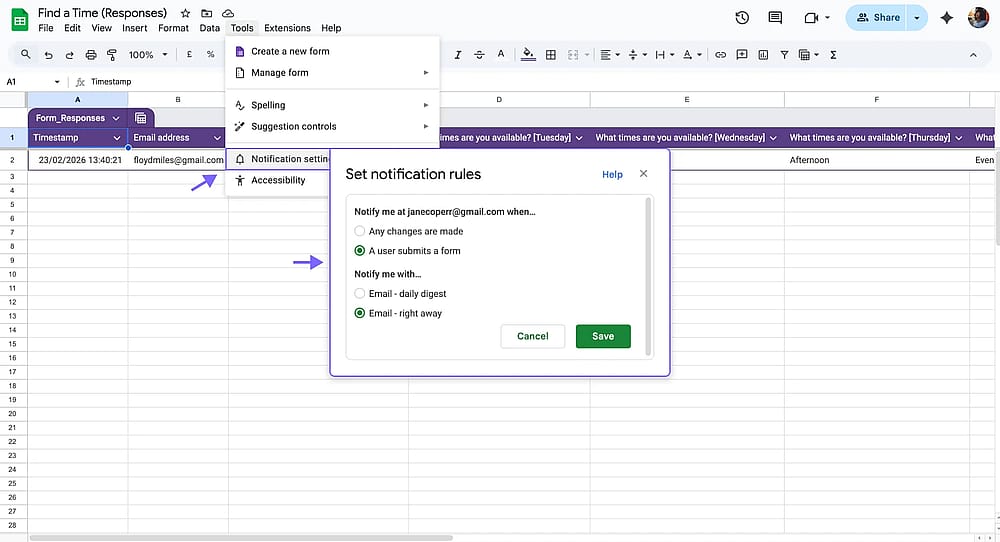
Editing Google Sheets notification settings
Best for: Teams that already use Google Sheets to review responses and do not want to share editor access to the Google Form itself.
Limitations: Each recipient still needs to configure their own notification settings. And while the Sheet connection is reliable, managing both a Form and a Sheet adds friction.
Method 3: The form notifications add-on
If you want to control who receives notifications without requiring each person to set up their own preferences, the Form Notifications add-on from the Google Workspace Marketplace is the a good solution. Here’s how to install and configure it:
1. On your Google Form, click the three dots in the top toolbar and select Get add-ons.
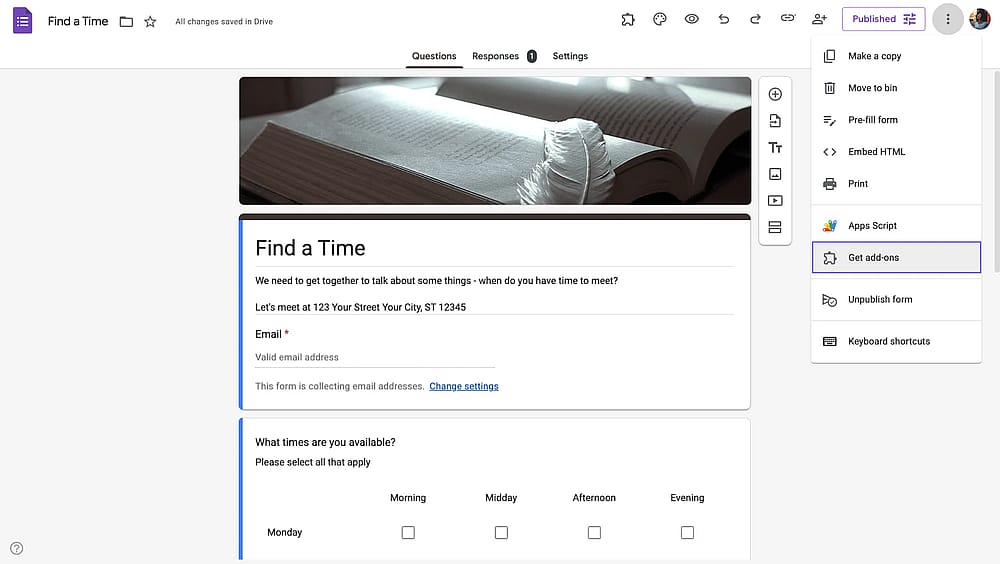
The option to open add-on marketplace on Google Forms
2. Search for Form Notifications in the Marketplace.
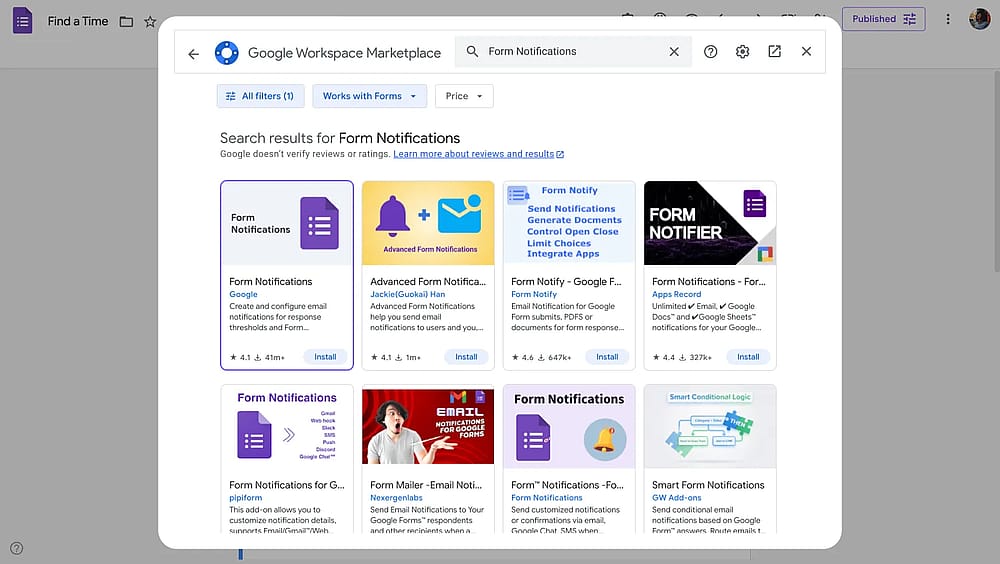
Search results for Form Notifications in the Marketplace
3. Click Install and authorize the add-on with your Google account.
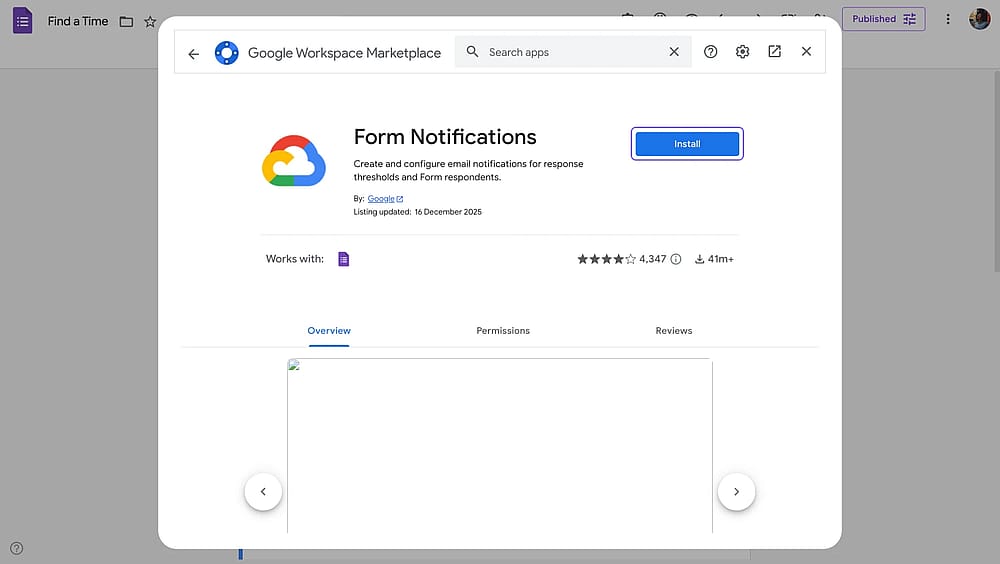
The Form Notifications add-on page
4. Once installed, click the puzzle piece icon again and select Form Notifications to open it.
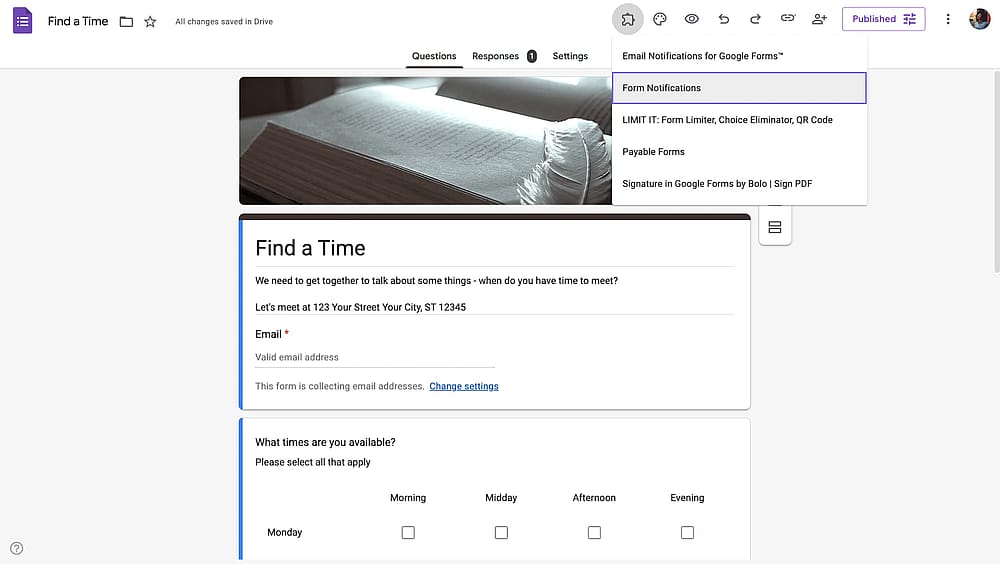
Opening the Form Notifications add-on
5. Toggle on Notify on form responses and enter all recipient email addresses.
💡 You can also change the email frequency based on the number responses.
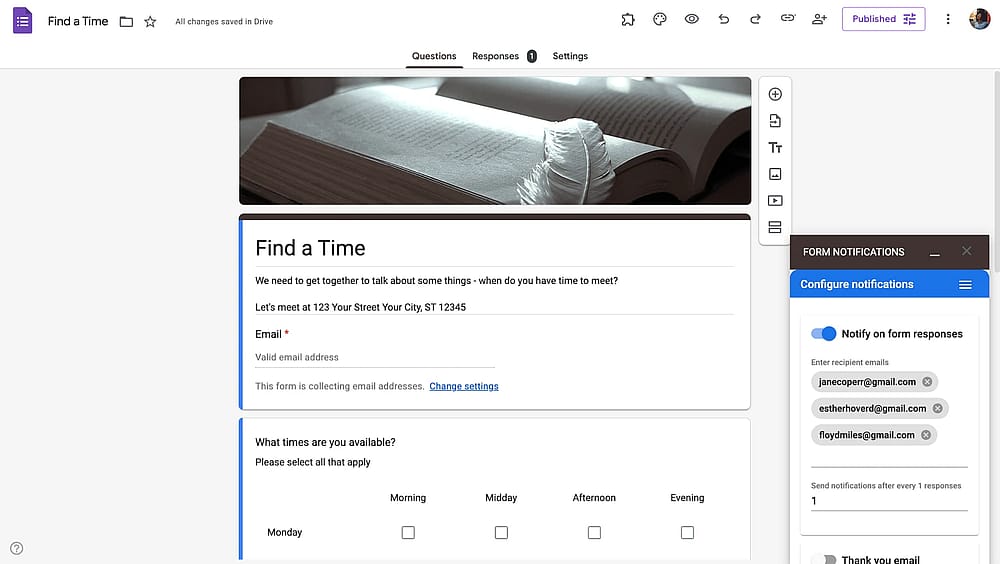
Configuring the Form Notifications add-on
6. Click Save configuration.
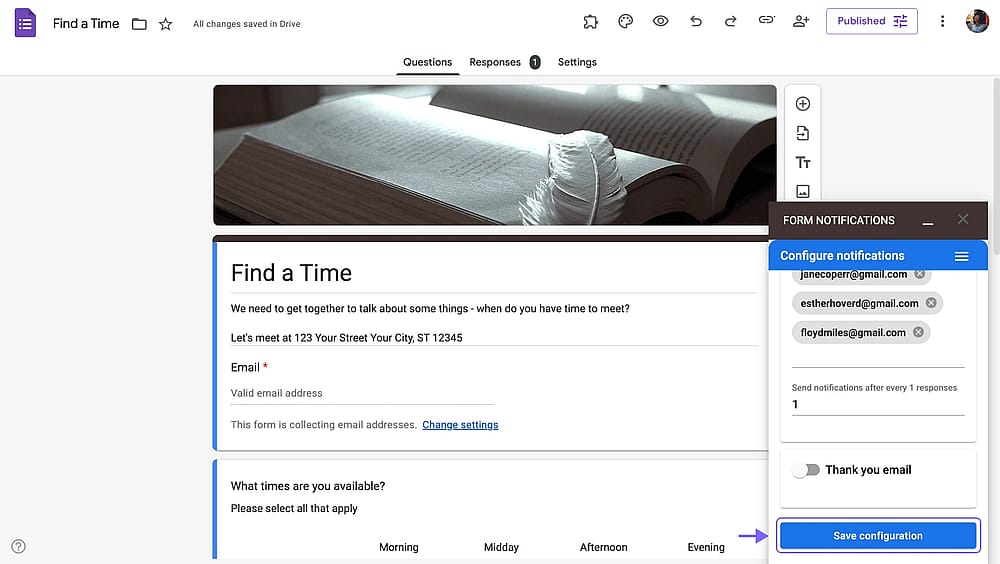
The save configuration button in the Form Notifications add-on
From this point on, every new form submission will trigger an email to every address you listed, all managed from one place, by the form owner.
Best for: Teams where a single person manages the form and needs to push notifications to others without involving them in the setup.
Limitations: This add-on has a mixed reputation. A notable number of users report that it can be unreliable (sometimes failing to send notifications, or requiring reinstallation after Google Workspace updates). It's a useful tool, but treat it as a workaround rather than a production-grade solution.
Method 4: Google Apps Acript (for advanced users)
Apps Script is Google's built-in scripting environment, and a short function can automatically email any list of recipients every time your form receives a new submission.
Here’s the idea: You write a small JavaScript function that runs whenever the form is submitted. The function reads the response data and sends an email to a predefined list of addresses. Let’s see how you can set up Google Apps Script to send Google Form responses to multiple email addresses:
1. Open your Google Form, click three dots and choose Apps Script.
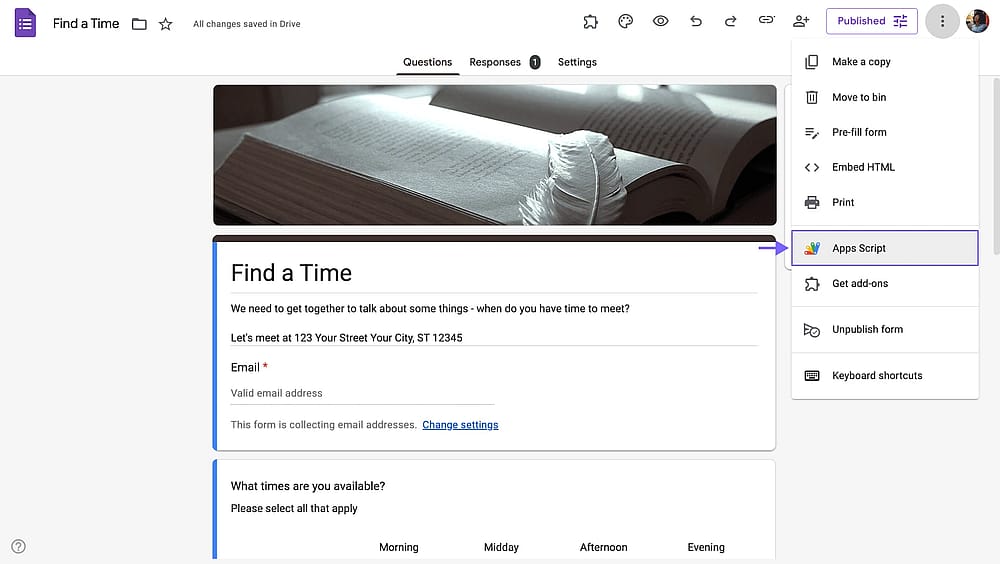
Opening Apps Script through Google Forms
2. On Apps Script, delete any existing code and paste this email script. Make sure to change emails (given as “email1[@]example.com”) with your own email addresses.
function sendEmailOnFormSubmit(e) {
const responses = e.response.getItemResponses();
let message = "New form submission:\n\n";
responses.forEach(response => {
message += response.getItem().getTitle() + ": " + response.getResponse() + "\n";
});
const recipients = [
"email1[@]example.com",
"email2[@]example.com",
"email3[@]example.com"
].join(",");
MailApp.sendEmail({
to: recipients,
subject: "New Form Submission",
body: message
});
}
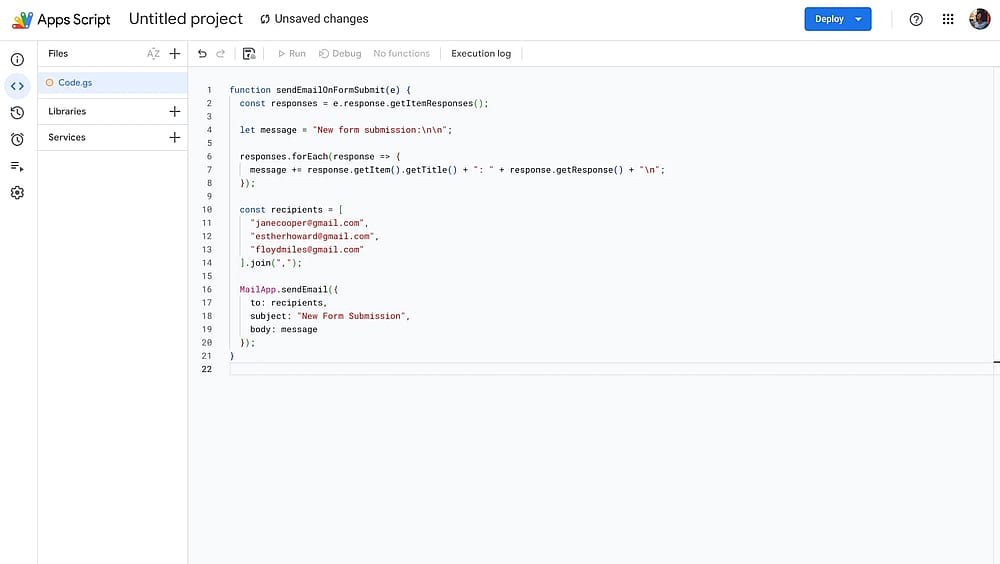
Adding an email notifications script for Google Forms responses
3. Save the script, then click Add Trigger (the clock icon on the left sidebar).
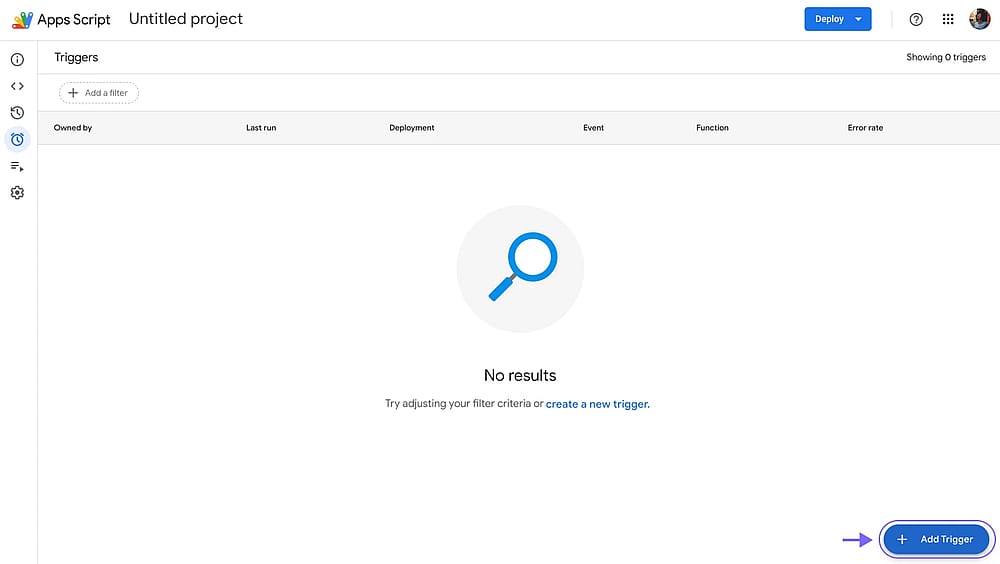
Adding a trigger in Apps Script
4. Set the trigger to run your function On form submit.
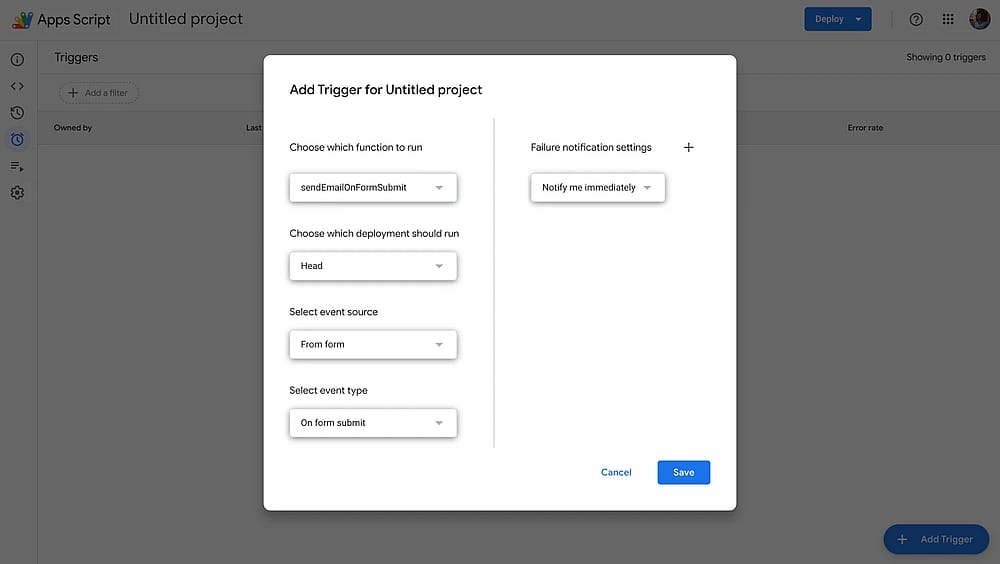
Setting a trigger in Apps Script
5. Click save, authorize the script, and test it by filling out a real response.
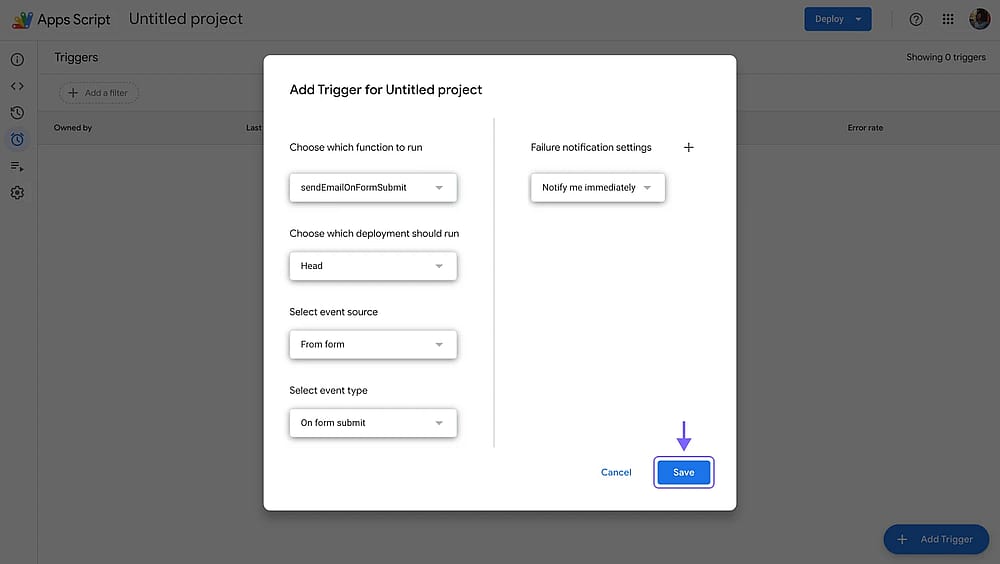
Saving the trigger on Apps Script
Best for: Teams with someone comfortable reading or editing basic JavaScript, who want full control over notification content, recipients, and conditions.
Limitations: Requires some technical knowledge. Apps Script has a daily email quota (100 emails/day for free Google accounts, higher for Workspace).
Method 5: Third-party automation tools (Zapier, Make, n8n)
Tools like Zapier, Make, and n8n connect Google Forms to email services through automated workflows called "Zaps" or "Scenarios." When a form is submitted, the automation triggers and sends an email.
These tools are genuinely powerful: you can add conditional logic (send a different email based on a specific answer), connect to your CRM, log to a database, and send Slack messages in the same workflow. However, they come with meaningful tradeoffs.
Best for: Teams that already use automation platforms and want to build more complex notification logic beyond just sending an email.
Limitations: Free plans are typically limited in the number of tasks per month, and more complex workflows require paid subscriptions. Setup also has a learning curve for non-technical users.
A better alternative to Google Forms: forms.app
forms.app is an all-around form builder app that offers powerful features, ease-of-use, and beautiful forms out of the box. If you are looking for powerful Google Forms alternatives, forms.app is a huge upgrade over Google Forms. Here’s a few:
- Built-in customizable email notifications for your team or respondents
- PDF generation from responses
- Native and easy Conditional logic
- Genuinely useful free plan
- Both step view and list view support
- Professional-looking forms out of the box
How to send form responses to multiple email addresses in forms.app
Every method above works around a limitation. If you'd rather not maintain add-ons, share Sheets, or write scripts, forms.app offers multiple email notifications as a built-in feature, so no workaround required.
- Step 1: Go to forms.app and open a form. You can always create a new form for free using free form templates, AI form generator, and form import options.
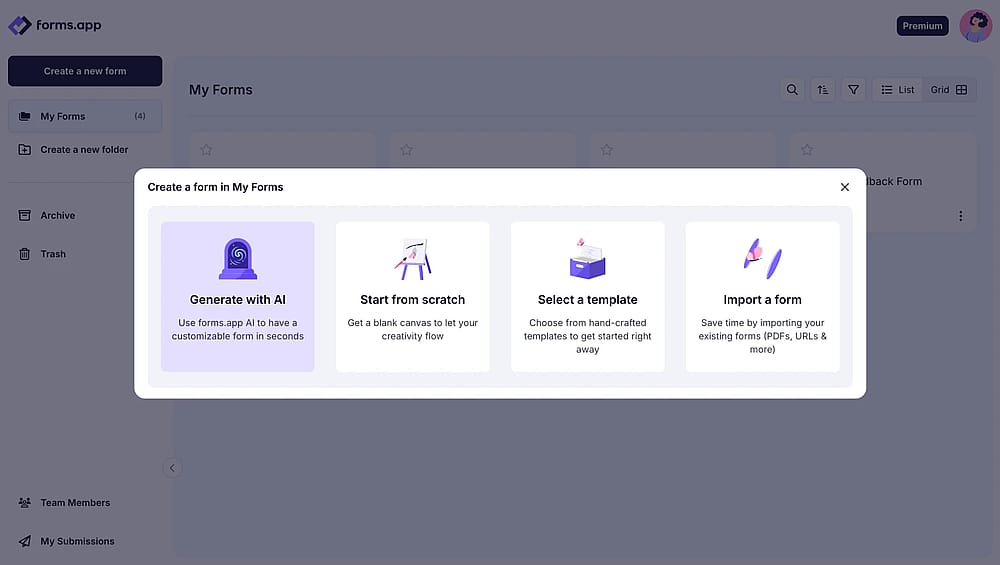
Options for creating a form on forms.app
- Step 2: Go to the “settings” tab and then “Notifications” section. There you can set-up notifications for yourself/your team or your respondents.
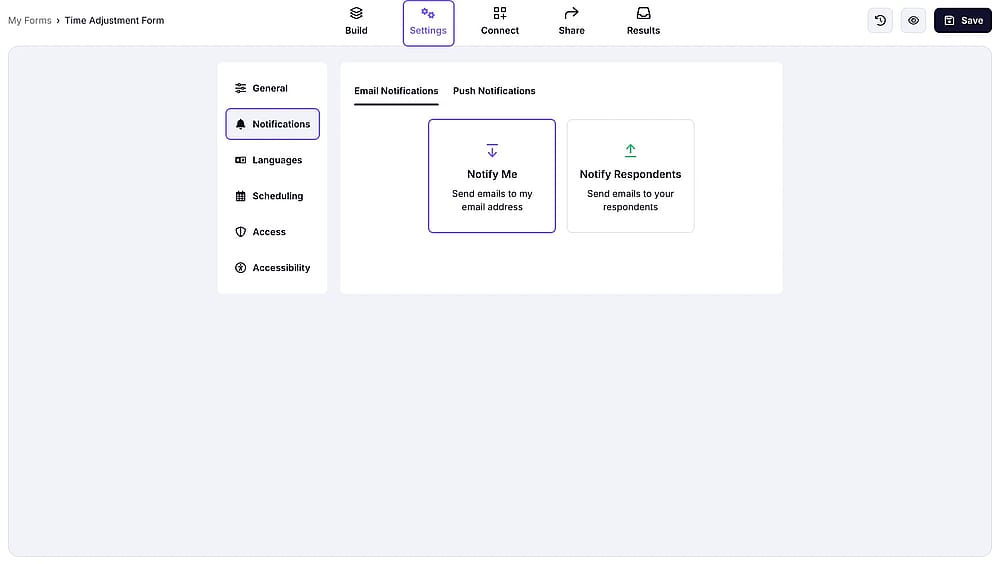
Notifications settings on forms.app
- Step 3: Click on “Notify me” and enable the notifications.
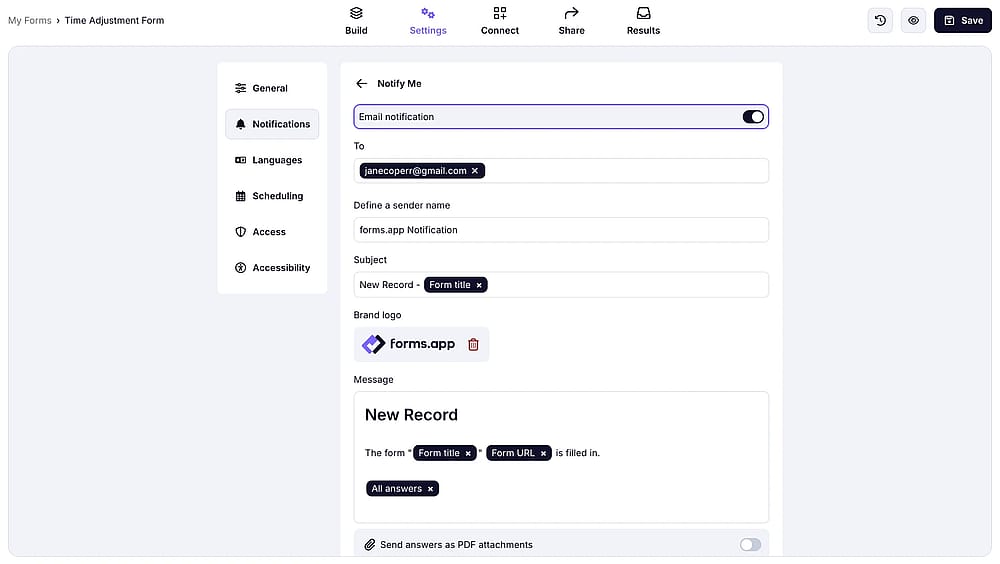
Enabling self-notifications on forms.app
- Step 4: Under “To”, you can add email addresses to receive notifications. Note that the email addresses you added here will receive an invitation, which they can accept or reject.
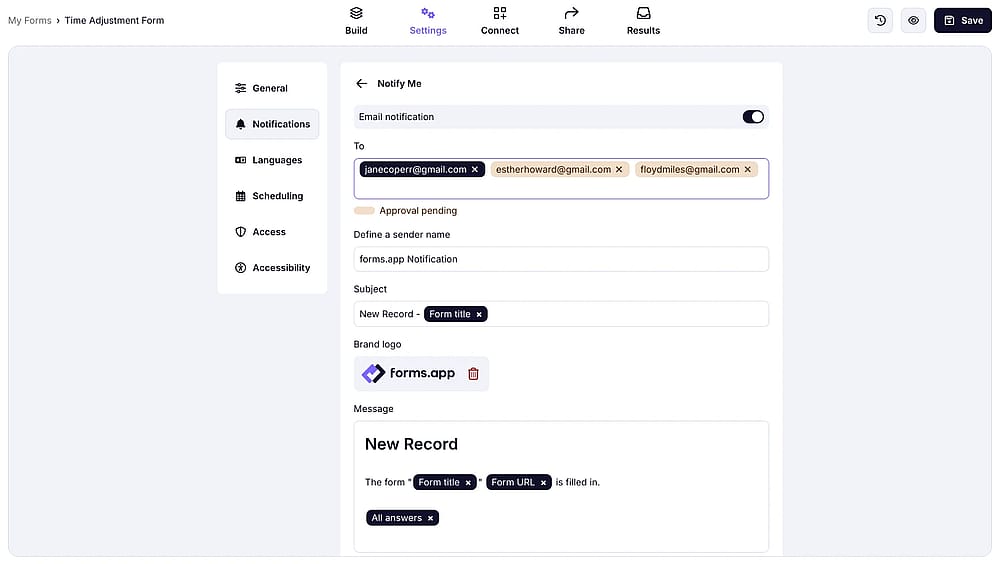
Adding other email addresses for notifications
- Step 5: On the notification settings, you can also change the subject, add your own logo, customize message itself, and attach the responses as PDF if you like.
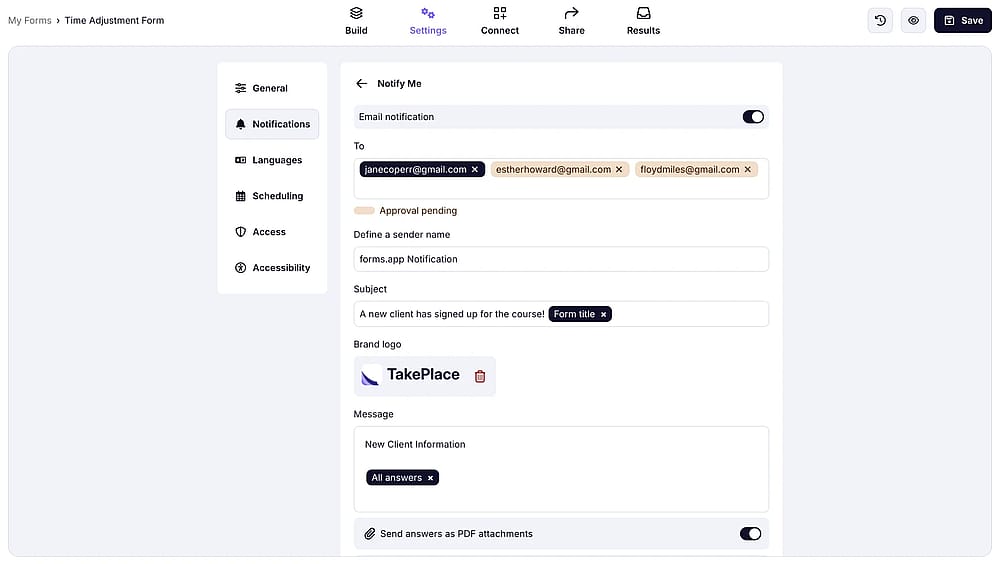
Customizing the email notification on forms.app
That’s it! Now, you will be able to send multiple emails whenever you receive a new form response.
Frequently asked questions on how to have Google Form responses emailed to multiple recipients
Not with Google Forms' built-in tools or the Form Notifications add-on. This kind of conditional email routing requires either Apps Script with custom logic, a third-party automation tool like Zapier or Make, or a form builder that supports conditional notifications natively.
The Form Notifications add-on is probably the quickest setup. Install it, enter your team's email addresses, and save. For something more reliable long-term, linking the form to a Google Sheet and using Sheets' native notification system is a solid no-add-on approach. If you'd rather skip workarounds entirely, forms.app handles this with a few clicks in its settings panel.
There is a simple way in google forms to change email notification addresses. First, open the google form and select email notifications from the add-ons menu to modify your emails' reply-to addresses. To update the reply-to address of an existing form rule, select manage form settings from the menu under create email notification.
Later on, enter the email address to which responses should be sent in reply to the address section. A comma should be used to separate each email address if you want to specify more than one here.
Conclusion
Google Forms' single-recipient limitation is one of those friction points that seems minor at first and becomes genuinely disruptive as a team grows. The four Google-native methods each have their place: the collaborator workaround is the fastest for small teams, the Form Notifications add-on gives central control with minimal setup, Google Sheets notifications are reliable and free, and Apps Script gives developers the most flexibility.
If you're spending more time managing workarounds than managing your forms, it may be worth trying forms.app, where multiple email notifications are just part of the default settings. The free plan covers most small-team needs, and the paid tiers are priced fairly if you need higher response limits.
Contributors
Researched & written by
forms.app, your free form builder
- Unlimited responses
- Unlimited questions
- Unlimited team members